













Technical Guide for EMI Suppression in Automotive High-Voltage Domain under CISPR25 — Special for BMS / OBC / Motor Controller / ADAS Radar & Camera
Key Conclusion: The power-stage switching frequency of high-voltage platforms (400V/800V) for new energy vehicles has risen from the kHz level of traditional ICE vehicles to tens to hundreds of kHz fo......
Read More
12
2026.10
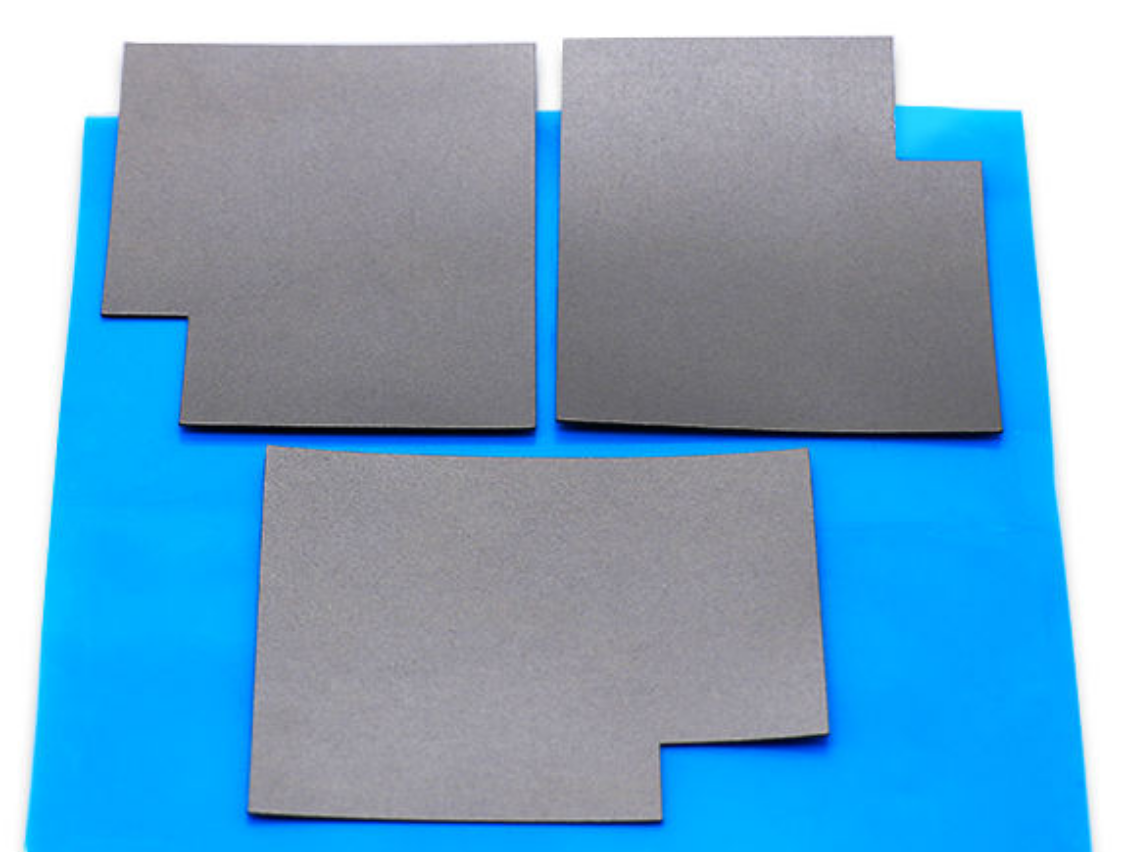
Application of EMI Products in Medical Electronics
Medical electronic equipment requires extremely high signal fidelity and operational safety. Even minor electromagnetic interference can distort measurement signals, corrupt imaging data, or cause equ......
Read More
07
2026.10
Application of EMI Products in Industrial Control and Automation
Industrial control and automation environments contain numerous strong electromagnetic interference (EMI) sources such as frequency converters, servo motors, high-power switching power supplies and hi......
Read More
07
2026.10
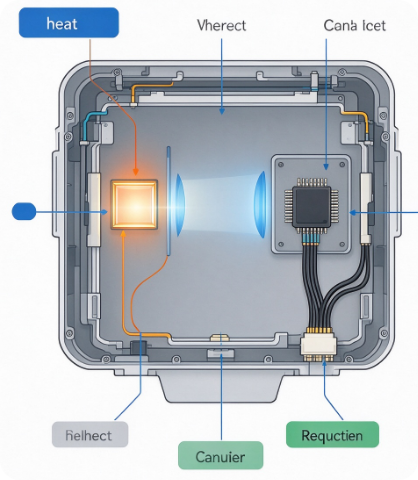
Guide to Material Selection and Application of Thermal Interface Sheets and Electromagnetic Shielding Materials for LiDAR
As a high-precision automotive optoelectronic sensor, LiDAR integrates high-frequency optoelectronic chips, power drive devices and precision optical paths. It faces three major challenges: thermal ma......
Read More
28
2026.09

Analysis on Application of High/Low Refractive Index UV Adhesives for Stereoscopic Imaging
The core principle of stereoscopic imaging technology is to realize 3D presentation of 2D images by modulating light refraction, diffraction, light splitting and light guiding. It is widely applied in......
Read More
22
2026.09
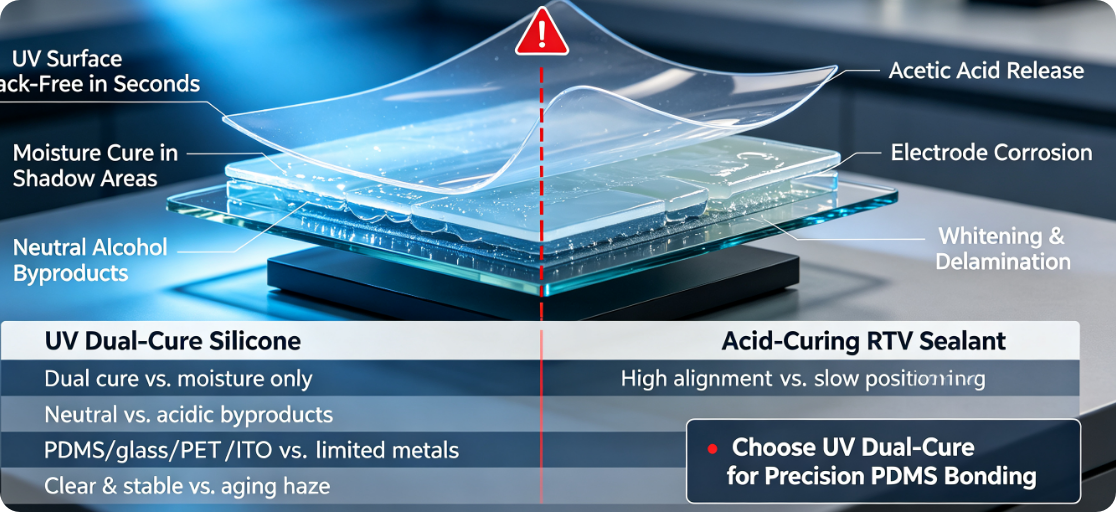
UV-Condensation Silicone vs. Acid-Curing Sealant for PDMS Membrane Bonding
For PDMS membrane bonding, lamination packaging, microfluidic devices and flexible electronics assembly, UV dual-cure condensation silicone and acid-curing RTV sealant are two widely used condensation......
Read More
10
2026.09
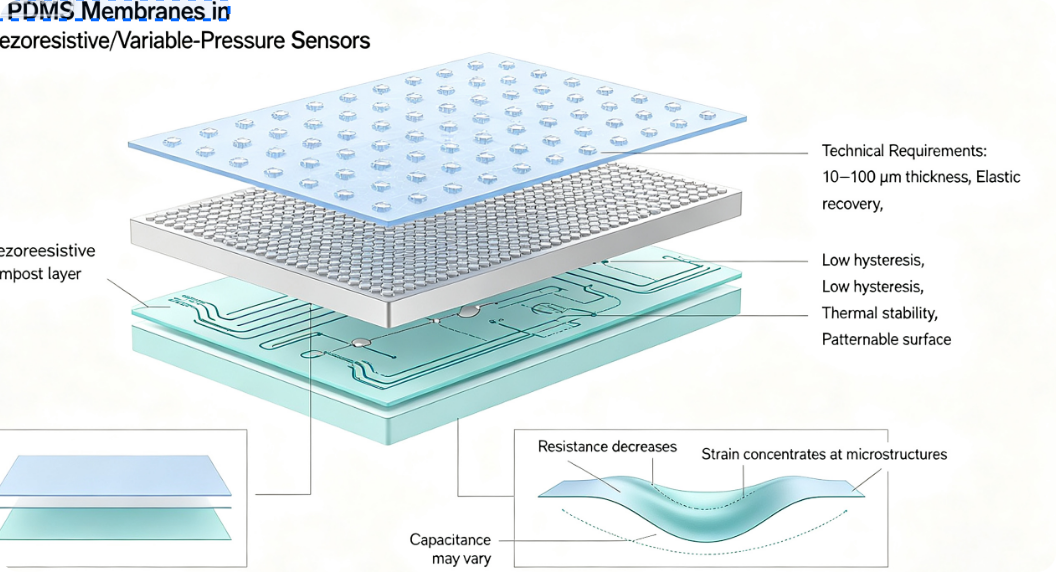
Functions and Technical Requirements of PDMS Membranes in Piezoresistive/Variable-Pressure Sensors
In variable-pressure sensors (capacitive and piezoresistive flexible pressure sensors), the PDMS membrane serves as the core elastic sensing and dielectric functional layer. It directly determines the......
Read More
03
2026.09
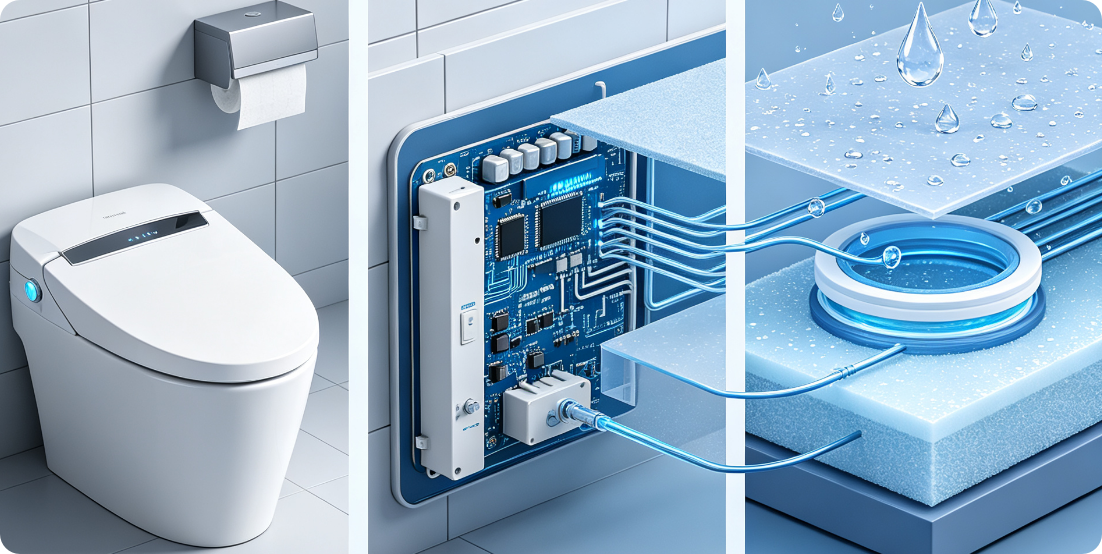
Condensation-Type Special Waterproof Adhesive – Professional Insulation & Waterproofing Solution for Smart Toilet Electronics
Smart toilets operate in harsh bathroom conditions characterized by high humidity, frequent temperature cycling, heavy condensation, and continuous water splashing. Conformal coatings and addition-cur......
Read More
31
2026.08
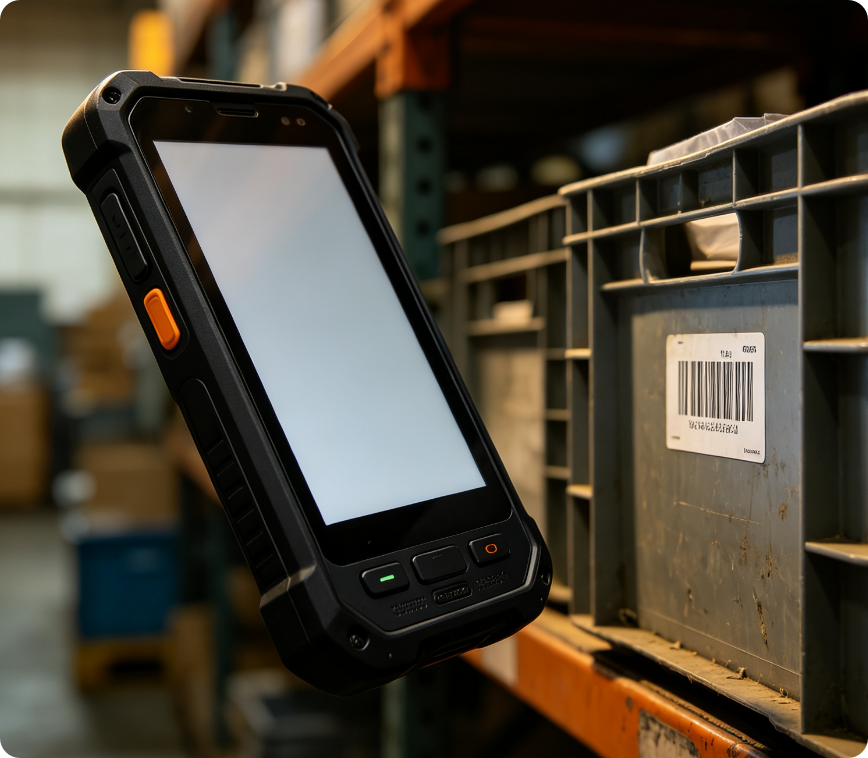
Development of a Cutting-Fluid-Resistant Waterproof Adhesive for Long-Term Electronic Device Protection
Abstract Electronic devices deployed in industrial manufacturing environments are frequently exposed to metalworking cutting fluids during enclosure machining and subsequent assembly operations. Conve......
Read More
31
2026.08
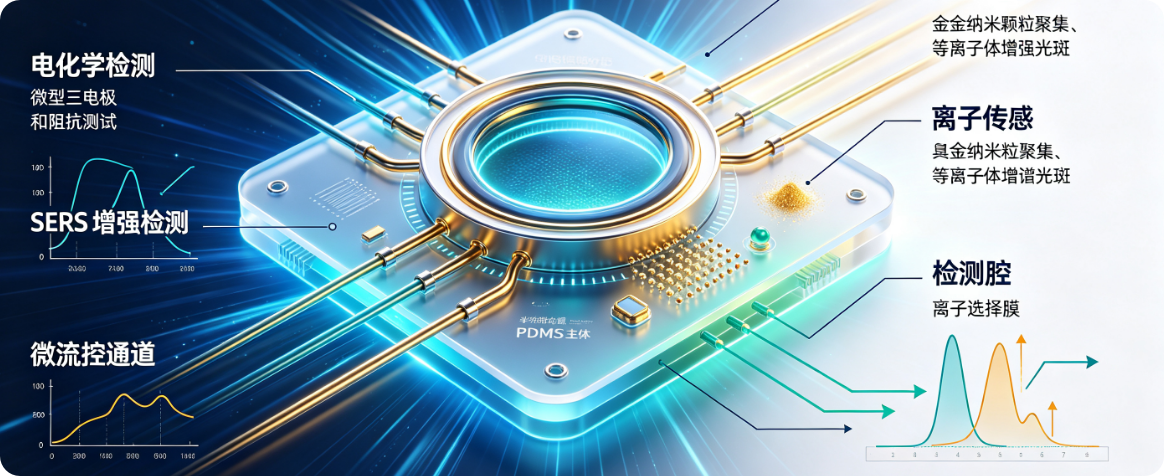
Material Properties and Applications of PDMS Membrane Sensing Chips
I. Core Material Properties of PDMS Membranes for Sensing Chip Integration 1. Mechanical Properties (Core for Tactile / Pressure Sensing) Tunable modulus: The standard 10:1 mixing ratio of prepolymer ......
Read More
21
2026.07

Application of PDMS Membrane in Medical Devices
Poly(dimethylsiloxane) (PDMS) membrane has been widely used in the field of medical devices due to its unique physicochemical properties, such as good biocompatibility, chemical stability, gas permeab......
Read More
06
2026.07
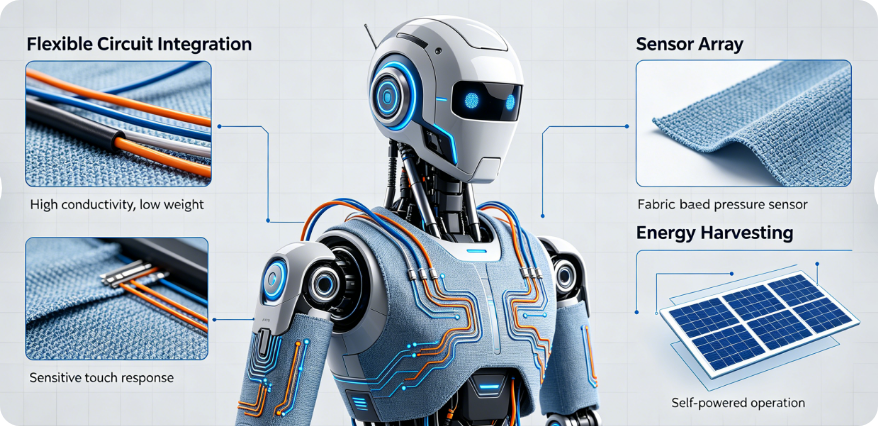
Technical Application of Conductive Fabrics in Robots
I. Core Technical Principles Shielding Mechanism Conductive fabrics (e.g., silver fiber cloth) form closed electromagnetic loops via the conductivity of metallic fibers, attenuating electromagnetic wa......
Read More
22
2026.06