The core principle of stereoscopic imaging technology is to realize 3D presentation of 2D images by modulating light refraction, diffraction, light splitting and light guiding. It is widely applied in fields such as autostereoscopic 3D displays, AR/VR optical waveguides, 3D optical films and stereoscopic imaging modules. High and low refractive index UV adhesives are core functional materials supporting the formation of optical structures for stereoscopic imaging. Leveraging advantages including fast UV curing, high-precision structuring and stable optical performance, they adopt an alternating laminated design of high-index and low-index adhesive layers to precisely tune light propagation paths. The adhesives address common industrial challenges of stereoscopic imaging such as ghosting, insufficient sharpness and weak stereoscopic perception, serving as critical consumables for precision manufacturing of optical stereoscopic imaging devices.
I. Core Properties of High/Low Refractive Index UV Adhesives and Imaging Matching Mechanism
The optical performance of stereoscopic imaging entirely relies on the refractive index difference between adhesive layers. High-index UV adhesive and low-index UV adhesive complement each other to form a standardized optical structural system compatible with various stereoscopic imaging processes.
1. Core Properties of High Refractive Index UV Adhesive
After curing, the refractive index of high-index UV adhesive generally reaches 1.60~1.63. It features high transmittance, low shrinkage, yellowing resistance and strong adhesion. The cured film is flat and free of warpage, introducing minimal optical interference. This material can precisely match optical parameters of optical films and glass substrates. It efficiently converges and refracts light to enhance the depth of field and layering of stereoscopic images. Meanwhile, it has moderate viscosity, compatible with roll coating, micro-structure replication and precision lamination for mass production. It exhibits excellent release performance to meet the fabrication requirements of high-precision optical microstructures, and is widely used for preparing core light transmission layers in stereoscopic imaging.
2. Core Properties of Low Refractive Index UV Adhesive
Cured low-index UV adhesive has a refractive index ranging from 1.41 to 1.43. It boasts ultra-low refractive index, high light transmittance, low viscosity and fast curing. The adhesive film offers good uniformity and stable mechanical strength. Within stereoscopic imaging structures, it mainly acts as light isolation layer, buffer layer and encapsulation layer. By forming a stable refractive index contrast with high-index adhesive, it enables directional light splitting, light guiding and total internal reflection modulation. It effectively suppresses optical crosstalk and scattering, improving image purity and resolution. The material releases no solvent volatiles, satisfying environmental and precision requirements for high-end optical component manufacturing.
3. Imaging Principle of Combined High and Low Index Adhesives
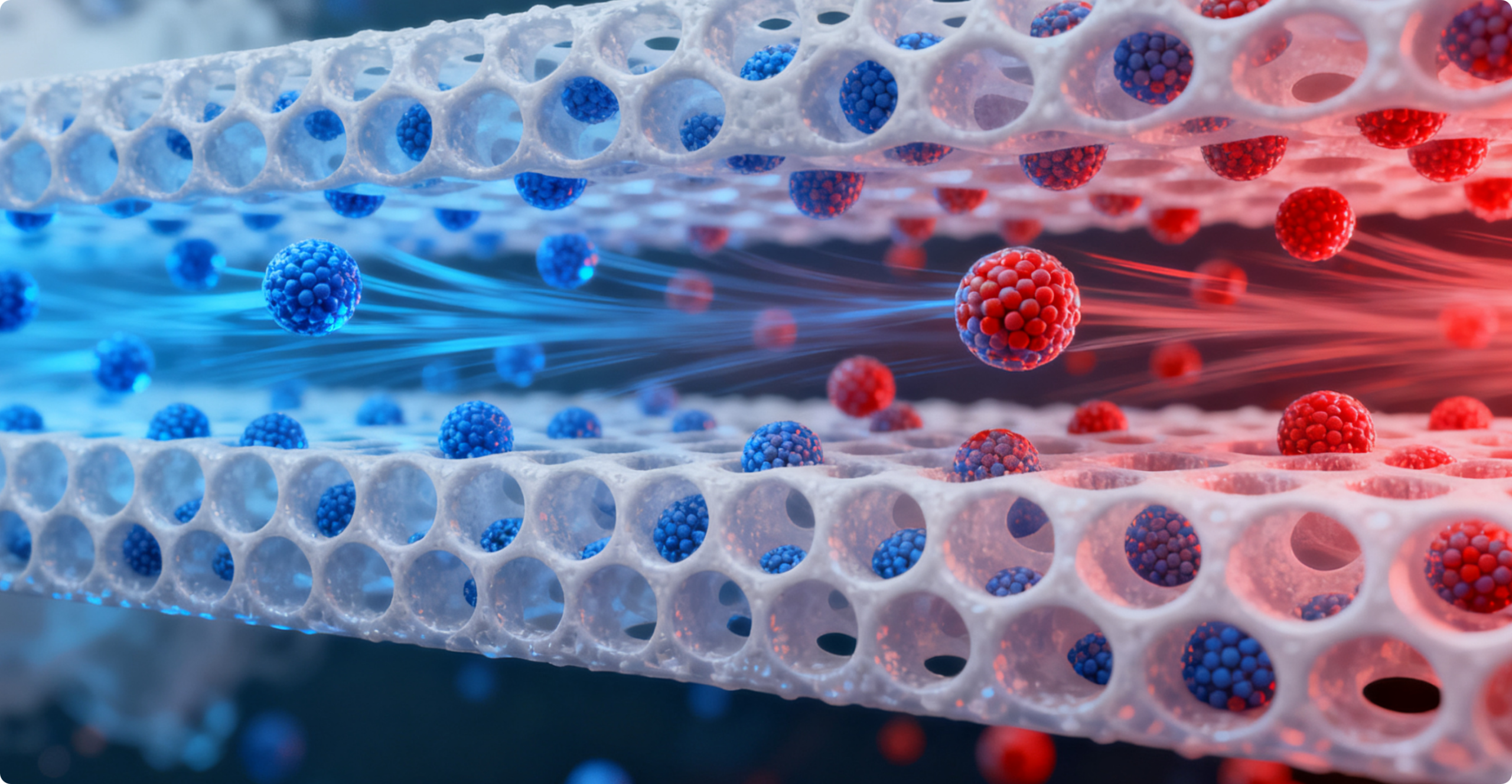
Stereoscopic optical structures adopt an alternating stack design: high-index adhesive imaging layer + low-index adhesive isolation layer. Regular optical microstructures are constructed using the fixed refractive index gap between the two materials. As light passes through stacked adhesive films, differential refraction and reflection separate parallax images for left and right eyes, enabling human eyes to perceive stereoscopic images with spatial depth. Compared with conventional optical adhesives, the combination of high/low index UV adhesives can precisely control light propagation paths, greatly reducing ghosting, chromatic dispersion and brightness attenuation, and is suitable for high-definition, high-precision stereoscopic imaging scenarios.
II. Key Application Scenarios
1. Optical Films for Autostereoscopic 3D Displays
This is the most mature application of high/low refractive index UV adhesives. They are extensively used for mass production of autostereoscopic 3D optical films for smartphones, laptops, LCD TVs and home appliance displays. Using micro-structure replication process, high-index UV adhesive forms core imaging microstructures such as lenticular lenses and gratings. Its high refractive index achieves accurate light refraction and lays the foundation for parallax imaging. Low-index UV adhesive then fills and encapsulates gaps of microstructures as optical isolation layers to block crosstalk between adjacent light channels and guarantee consistency of multi-view stereoscopic imaging. 3D optical films fabricated by this process deliver uniform stereoscopic perception and high definition. Compatible with large-scale roll-to-roll production, the process achieves much higher yield and stability than traditional coating processes.
2. AR/VR/MR Waveguide Imaging Devices
In waveguide modules for head-mounted displays, high/low refractive index UV adhesives constitute core materials for light splitting and light guiding structures. Low-index UV adhesive separates RGB light-guiding layers to realize independent propagation of each color channel and prevent color crosstalk and distortion. High-index UV adhesive is applied for lamination and structuring of waveguide micro-nano features, precisely regulating light coupling-in, propagation and coupling-out, and ensuring clarity and immersion of close-range stereoscopic imaging in AR/VR devices. This application imposes stringent requirements on optical stability. The UV adhesives withstand high-low temperature cycling and damp-heat aging, with no yellowing or light path drift over long-term service, meeting durability demands of wearable devices.
3. Bonding of Precision Stereoscopic Optical Lenses and Modules
Applied to lamination and structuring of miniature stereoscopic optical modules including phone camera lenses, security monitoring and industrial inspection optics. High-index UV adhesive bonds and fixes optical lens groups. Controlled refractive index minimizes optical interference of adhesive layers, preserves light transmission integrity and improves accuracy of stereoscopic ranging and imaging. Low-index UV adhesive fills gaps and provides optical buffering inside modules, eliminating refractive blind zones and optimizing overall image quality. Featuring fast curing and moderate hardness, the adhesive supports high-speed mass production of miniaturized, high-precision optical components.
4. 3D Stereoscopic Textures and Imaging Marks
For civilian applications such as UV DTF stereoscopic transfers and optical textured films, stacked cured layers of high/low index UV adhesives form surface structures with light-shadow stereoscopic effects. High-index adhesive enhances surface gloss and light refraction, while low-index adhesive serves as underlying support and buffer to create rich 3D texture. These materials are widely used for decorative stereoscopic imaging on glass, metal and plastic substrates, combining wear resistance, light transmittance and clear visual texture.
III. Compatibility with Mainstream Manufacturing Processes
1. Micro-structure Replication Process
It is the core process for stereoscopic optical films. High-index UV adhesive is coated onto a metal mold, laminated with PET or optical glass substrate, then UV-cured. After demolding, high-precision gratings and lens microstructures are formed. Low-index UV adhesive is subsequently used for gap filling and film lamination protection. This process achieves high precision and fast forming speed for mass production of 3D optical films. The adhesive exhibits low cure shrinkage without structural deformation.
2. Roll Coating Lamination Process
Both high-index and low-index UV adhesives adopt low-viscosity formulations compatible with automatic roll coaters. Uniform multi-layer coating and continuous lamination can be realized with controllable thickness and excellent layer consistency. With high throughput, this process is suitable for large-format autostereoscopic 3D films and large-area waveguide films, and represents the dominant mass-production route in the industry.
3. Dispensing and Lamination Process
Targeting AR/VR micro-modules and precision optical lenses, high-precision dispensing accurately controls coating position and dosage of high/low index adhesives. After curing, strong bonding strength and defect-free optical interfaces are obtained, fulfilling manufacturing requirements for miniaturized high-precision stereoscopic imaging components.
IV. Application Advantages and Industrial Challenges
1. Core Advantages
First, superior optical performance: stable refractive index difference between high and low index layers enables precise light modulation, delivering sufficient depth of field, minimal ghosting and high color fidelity for stereoscopic images.
Second, good process adaptability: instantaneous UV curing yields far higher throughput than thermally curable adhesives, compatible with diverse automated mass-production equipment.
Third, reliable stability: cured adhesive layers resist yellowing and aging with low deformation, satisfying long-term service requirements of consumer electronics and optical instruments.
Fourth, broad substrate compatibility: capable of bonding PET, glass, metal and other optical substrates without corrosion or delamination.
2. Existing Industrial Pain Points
On one hand, customizing high/low refractive index parameters is technically challenging. High-end AR/VR and high-definition autostereoscopic 3D displays require extremely tight tolerance on refractive index. General-purpose adhesives cannot fit specialized scenarios, resulting in high R&D cost for customization.
On the other hand, multi-layer lamination tends to suffer from uneven thickness, bubbles and layer misalignment, which impair imaging uniformity.
In addition, core formulations for specialty ultra-high-index and ultra-low-index UV adhesives still present technical barriers; the high-end market relies on refined formulation optimization.
V. Industry Development Trend
Alongside the popularization of autostereoscopic 3D displays and the trend toward lightweight, high-definition AR/VR hardware, the performance requirements for high/low refractive index UV adhesives for stereoscopic imaging keep rising. Future adhesives will evolve toward ultra-high refractive index, ultra-low dispersion, ultra-thin film thickness and superior weather resistance, while supporting fabrication of ultra-fine micro-nano structures and integrated multi-layer lamination processes.
Furthermore, functional composite UV adhesives have become a hot research topic. Such materials integrate high/low index optical properties together with self-defoaming, easy demolding, blue-light blocking and other functions, further boosting stereoscopic imaging quality and production yield. New application frontiers including automotive 3D displays, industrial stereoscopic inspection and metaverse wearable devices will be expanded.