











The Technical Essence and Performance Breakthroughs of Ultra-Soft Conductive Adhesive
I. Core Materials: Technical Essence and Performance Breakthroughs of Ultra-Soft Conductive Adhesives
1. Cutting-Edge Research-Grade Materials: Metallic Gels and Ionic Gels
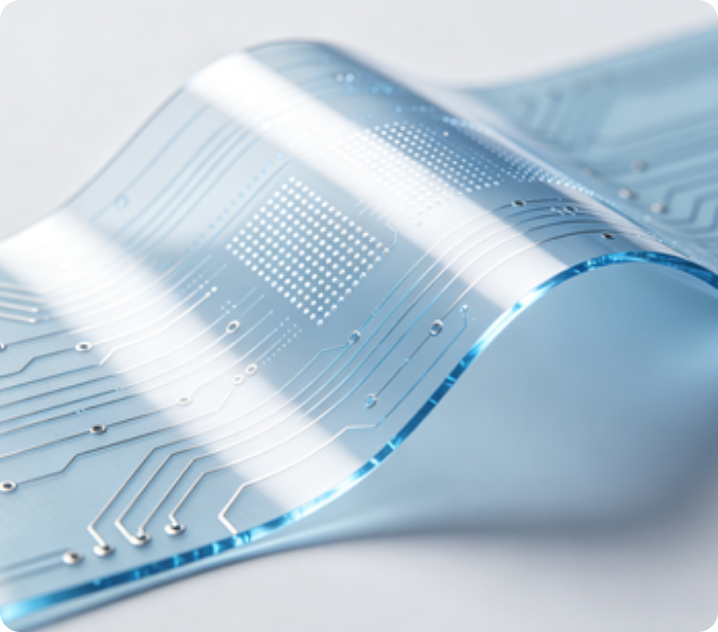
e-skin
Metallic Gels
Represented by the liquid metal-polymer gel developed by Nanjing University in its 2026 breakthrough, this material locks 93.6% liquid metal (e.g., gallium-indium alloy) via dynamic hydrogen bond networks. It achieves metal-grade conductivity of , with a stretchability of up to 1100%. After one million repeated stretching cycles, its resistance varies by merely 3.3%. With a modulus of 264 kPa matching biological tissues, it perfectly meets the high-frequency movement demands of robotic joints.
Ionic Gels
Composed of polymer networks and ionic liquids, ionic gels boast a stretch rate exceeding 300% (up to 1000% for certain variants). Leveraging the electric double-layer capacitance principle, they deliver ultra-high sensitivity (>50 nF/kPa), alongside self-healing efficiency above 90% and over 90% light transmittance. AgBioA bio-conductive adhesive developed by Shanghai Jiao Tong University incorporates silver flake fillers, balancing strong adhesion and painless ethanol-assisted peeling, making it ideal for human-machine contact scenarios.
2. Commercial Products: Ultra-Soft Conductive Glues
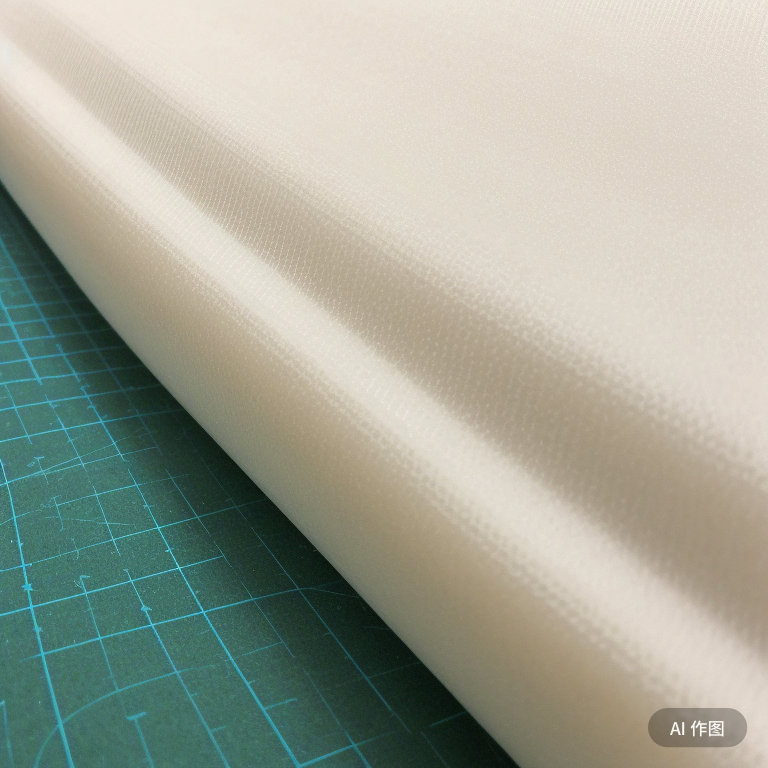
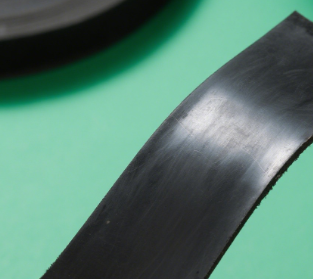
- Hardness: only 45 Shore A (similar to human skin texture)
- Volume resistivity: ≤ 0.04 Ω·cm
- Shielding effectiveness: over 90 dB in the 40 GHz frequency band
- Minimum dispensing line dimension: 0.4 mm × 0.3 mm
- Operating temperature range: -50 ℃ to 125 ℃
II. Technological Innovation: Leap from “Structural Flexibility” to “Intrinsic Material Flexibility”
1. Structural Optimization: Upgraded Solution for Traditional Flexible Electronics
2. Material Innovation: Core Solution for Bionic Electronic Skin
- Metallic gels adopt molecular anchoring technology to ensure synchronous deformation of conductive networks and polymer matrices, eliminating common drawbacks of traditional conductive fillers such as migration and leakage.
- Relying on ionic conduction mechanisms, ionic gels respond 1,000 times faster than conventional electronic conductive materials. They support multi-modal sensing of pressure and temperature, and can even attach to camera surfaces to realize visual-tactile integration.
- Flexible conductive adhesive binders (e.g., liquid metal-silver flake composite adhesives) enable room-temperature processing and firmly bond rigid electronic components to flexible substrates, with a fracture energy of 350–700 J/m², providing a low-temperature solution for hybrid electronic integration.
III. Application Scenarios: Endowing Robots with Human-Like Perception and Manipulation Capabilities
1. Flexible Sensing Layers: Accurately Capturing Environmental Signals
- Tactile Perception: The high conductivity and fatigue resistance of metallic gels make them ideal sensing materials for robotic fingers and joints. They detect pressure ranging from 1 kPa to 1 MPa, enabling both delicate grasping of lightweight objects (e.g., quail eggs) and heavy-load lifting (e.g., 1.2 kg aluminum blocks).
- Multi-Modal Monitoring: Ionic gels are inherently temperature-sensitive, integrating tactile and temperature sensing functions. AgBioA conductive adhesive achieves high-fidelity monitoring of physiological signals including ECG and EDA, laying a foundation for human-machine interaction in medical robots.
- Electromagnetic Shielding: Commercial ultra-soft conductive adhesives (e.g., CG-8025R) deliver shielding effectiveness of ≥90 dB in confined spaces, mitigating electromagnetic interference for robotic electronic skin and ensuring stable sensing signals.
2. Integrated Actuation-Sensing: Enabling Flexible Motion Control
- A research team at the University of Science and Technology of China developed micro-robots capable of dynamic movement using hydrogel-silver nanoparticle composites, demonstrating great potential for flexible actuators.
- South Korean researchers designed a metallic-hydrogel bilayer structure, which executes joint bending, grasping and other movements via electrical signals. Meanwhile, real-time resistance changes feedback deformation status, forming a closed loop of sensing and actuation.
3. Controllable Adhesive Skin: Expanding Robotic Interaction Boundaries
- Bionic microfiber conductive adhesives based on shape memory polymers undergo low-temperature phase transition at 36 ℃, achieving cross-scale adjustment of adhesion strength from 0.65 kPa to 2 MPa with an on-off ratio exceeding 100. They support complex tasks such as towel cleaning and steel ball manipulation.
- This design allows robots to accurately detect surface topography and stably grip heavy objects, breaking the limitation of traditional robots with fixed adhesion states. It is widely applicable to logistics sorting, precision manufacturing and other fields.
IV. Challenges and Future Directions
- Signal Stability: Ionic gels suffer from temperature drift, requiring optimized material formulations to reduce environmental sensitivity.
- Response Speed: One phase transition cycle of shape-memory conductive adhesives takes approximately one minute, necessitating faster switching mechanisms.
- Large-Scale Production: Research-grade materials (e.g., metallic gels) involve complex preparation processes that need simplification for industrial mass manufacturing.