I. Introduction
1.1 Research Background
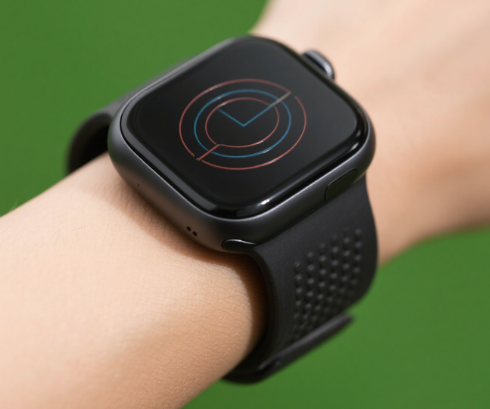
Against the backdrop of rapid technological development, the consumer electronic product market continues to show a vigorous development momentum. From smartphones and smart wearable devices to smart home appliances and virtual reality products, consumer electronic products have been deeply integrated into people’s daily lives and become an indispensable part of life. Relevant data shows that in the first three quarters of 2024, the global and Chinese shipments of consumer electronic products achieved year-on-year growth to varying degrees. China’s smartphone market shipment reached approximately 286 million units in 2024, a year-on-year increase of 5.6%, bottoming out and rebounding after two years. China’s tablet market shipment reached 29.85 million units in 2024, with a year-on-year growth of 4.3%, marking a market recovery. In the first three quarters of 2024, the global shipment of wrist-worn devices reached 140 million units. China delivered an outstanding performance, with its wrist-worn device shipment rising by 20.1% year-on-year, ranking first in the world and becoming the world’s largest wrist-worn device shipment market.
With the quickening pace of life and increasing pressure, mental health has attracted widespread attention. Consumers have a growing demand for products that can monitor personal emotional status in real time and provide emotional adjustment assistance. In this context, the emotion-aware interactive electronic skin patch has emerged. It breaks the traditional sensor-oriented functional mode of consumer electronic products, focuses on emotion recognition and real-time feedback, and provides users with a brand-new emotional management experience.
1.2 Research Purpose and Significance
This research aims to deeply analyze the innovative product of consumer-grade emotion-aware interactive electronic skin patch, and explore its technical principles, product characteristics, market potential, competitive advantages and other dimensions in detail. Through comprehensive and systematic research, it provides valuable reference for relevant enterprises in product research and development as well as market promotion strategy formulation, helping enterprises clarify their positioning in the fierce market competition and enhance product competitiveness.
From the perspective of industrial development, this research helps promote the intelligent and humanized development of consumer electronic products, expand their application fields and functional boundaries, and drive industrial innovation and upgrading. For consumers, the emotion-aware interactive electronic skin patch enables users to better understand their emotional changes, adjust emotions in a timely manner, maintain mental health and improve the overall quality of life.
1.3 Research Methods and Data Sources
This research adopts a combination of multiple research methods. By extensively reviewing academic literature, industry reports, patent materials and other documents, this paper clarifies the development status and research achievements of emotion perception technology and electronic skin patch technology, so as to lay a solid theoretical foundation. Meanwhile, it analyzes existing similar products and relevant enterprise cases in the market, summarizes their strengths and deficiencies, and provides practical references for the research of consumer-grade emotion-aware interactive electronic skin patches.
In terms of data acquisition, research data mainly comes from reports released by authoritative market research institutions such as IDC and Counterpoint, relevant research papers in academic databases, as well as official product information and financial reports released by enterprises. In addition, part of first-hand materials and user feedback are collected through network retrieval and industry forums to ensure the comprehensiveness and accuracy of research data.
II. Product Overview
2.1 Definition and Working Principle
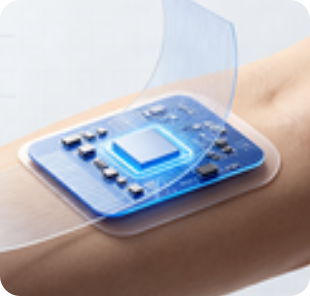
The consumer-grade emotion-aware interactive electronic skin patch is an innovative wearable device that adopts advanced sensor technology and intelligent algorithms to realize accurate identification and real-time feedback of users’ emotional states. The product is attached to the inner side of the human wrist, where pulses are dense and rich physiological signals can be collected stably.
Its working principle is based on the theory that human bodies produce corresponding physiological changes under different emotions. When users are in states such as tension, anxiety or pleasure, significant changes will occur in pulse fluctuation and electrodermal response. For example, when people are nervous or anxious, the sympathetic nerve is excited, resulting in accelerated heartbeat and faster pulse, as well as increased sweat gland secretion and enhanced electrodermal response. In a pleasant state, heartbeat and pulse remain relatively stable, and the electrodermal response stays at a steady level.
The high-sensitivity pulse sensor built in the electronic skin patch accurately captures the frequency, intensity and rhythm of pulse beats, while the electrodermal sensor monitors real-time changes in skin resistance and capacitance to obtain skin electrical signals. The sensors convert the collected physiological signals into electrical signals and transmit them to the built-in microprocessor. Combined with pre-trained machine learning algorithms, the microprocessor analyzes and processes electrical data, compares it with the established emotional physiological feature database, and finally identifies the user’s current emotional state.
2.2 Core Difference Analysis
Compared with traditional functional sensing equipment, consumer-grade emotion-aware interactive electronic skin patches have obvious core differences. Traditional functional sensing equipment mainly focuses on the monitoring of physical quantities such as temperature, pressure and acceleration, or physiological parameters including heart rate, blood pressure and blood oxygen saturation. It aims to provide objective physiological data for health monitoring, sports tracking, industrial control and other scenarios.
In contrast, the emotion-aware interactive electronic skin patch takes emotion recognition and real-time feedback as its core function, focusing on identifying users’ emotional states and providing multi-dimensional emotional adjustment support. It is not merely a simple data collection tool, but an intelligent device that can realize emotional interaction with users. For instance, traditional smart bands can monitor heart rate, but cannot distinguish whether heart rate elevation is caused by exercise or anxiety. In comparison, the emotion-aware interactive electronic skin patch comprehensively analyzes multi-dimensional physiological signals such as pulse fluctuation and electrodermal response, accurately identifies emotional changes, and delivers timely feedback and adjustment suggestions.
2.3 Innovation Analysis
2.3.1 Unique Wearing Position and Emotion Perception Mode
Attaching the electronic skin patch to the pulse-intensive area on the inner wrist has multiple advantages. Firstly, the skin on the inner wrist is delicate and sensitive, which can capture subtle changes in pulse fluctuation and electrodermal response more accurately and improve the precision of emotion recognition. Secondly, the wrist is an easily exposed and accessible part in daily activities, making it convenient for users to wear at any time without interfering with daily life and work. In addition, the inner wrist wearing design conforms to ergonomics, bringing almost no foreign body sensation and excellent wearing comfort.
It recognizes multiple emotions by monitoring pulse fluctuation and electrodermal response. Specifically, rapid and irregular pulse together with enhanced electrodermal response will be judged as tension or anxiety; stable and slow pulse with steady electrodermal response usually indicates a relaxed and pleasant mood. For other emotions such as anger, the pulse tends to beat rapidly and forcefully with significantly enhanced skin electrical activity; in a sad state, the pulse rate slows down accompanied by unique electrodermal changes different from those of tension and anxiety. The algorithm identifies these complex physiological signal patterns to realize accurate recognition of diverse emotions.
2.3.2 Real-time Color Feedback and Emotional Visualization
The electronic skin patch adopts color-changing flexible materials to feed back emotional states through real-time color changes and realize emotional visualization. Such color-changing flexible materials are generally made of electrochromic or photochromic materials. Connected to the internal circuit, they change colors according to control signals output by the microprocessor.
The electronic skin patch presents different colors corresponding to different emotional states. For example, it turns red when detecting tension, and the shade of red indicates the degree of tension; it shows green, blue and other soothing colors when users feel pleasant. Through intuitive color changes, users can quickly understand their emotional status without complex operation and interpretation, making emotions visible and perceivable. Emotional visualization not only helps users recognize their inner emotions, but also enables others to perceive one’s mood through color changes in social scenarios, so as to promote effective communication and interaction.
2.3.3 Intelligent Linkage and Portable Emotional Regulation Function
The consumer-grade emotion-aware interactive electronic skin patch supports intelligent linkage and can be seamlessly connected with mobile music applications and smart speakers, acting as users’ portable emotional regulator. It connects to mobile music platforms through Bluetooth communication technology and transmits identified emotional data to mobile applications. The music application automatically selects and plays suitable music from the music library according to real-time emotional information. For example, when anxiety is detected, soft and soothing light music such as Annie’s Wonderland by Bandari and Castle in the Sky by Joe Hisaishi will be played to relax users; when users feel fatigued, upbeat and dynamic music such as Jay Chou’s Sunshine Otaku and Mayday’s Leave the Earth’s Surface will be recommended to refresh spirits.
The linkage with smart speakers is realized through voice interaction. When negative emotions are detected, the electronic skin patch will send instructions to the smart speaker to trigger preset soothing voice feedback and provide warm comfort and encouragement, such as sentences like “Don’t worry, everything will be fine, you have done well”. The intelligent linkage enables users to obtain convenient emotional regulation support in multiple scenarios and maintain a positive mood at all times.
III. Technical Implementation and Key Components
3.1 Sensor Technology
The consumer-grade emotion-aware interactive electronic skin patch mainly relies on pulse sensors and electrodermal sensors to realize accurate collection of human physiological signals. The pulse sensor mostly adopts infrared PPG photoelectric pulse sensors. The infrared LED inside the sensor emits infrared light with specific wavelengths such as 850nm or 940nm. After irradiating the inner wrist skin, part of the light is absorbed by skin and bones, part is reflected and scattered, and the rest penetrates subcutaneous tissues to the receiving end. Blood volume changes during cardiac systole and diastole will affect the light absorption rate of blood, resulting in periodic changes in received light intensity. The photodetector converts light intensity changes into weak analog electrical signals. After amplification, filtering and analog-to-digital conversion, clear digital pulse signals are formed to calculate heart rate and pulse characteristics.
The electrodermal sensor works based on the principle that emotional changes affect sweat gland secretion and further cause changes in skin resistance and capacitance. When people are nervous or anxious, sympathetic nerves are activated, sweat secretion increases, skin surface moisture rises, and skin resistance decreases while capacitance increases. The electrodermal sensor detects such changes and converts them into measurable electrical signals to reflect emotional fluctuations. It adopts metal electrodes for direct skin contact. To ensure detection accuracy and stability, effective contact and real-time calibration are required to eliminate the interference of individual differences and environmental factors.
3.2 Flexible Materials and Manufacturing Technology
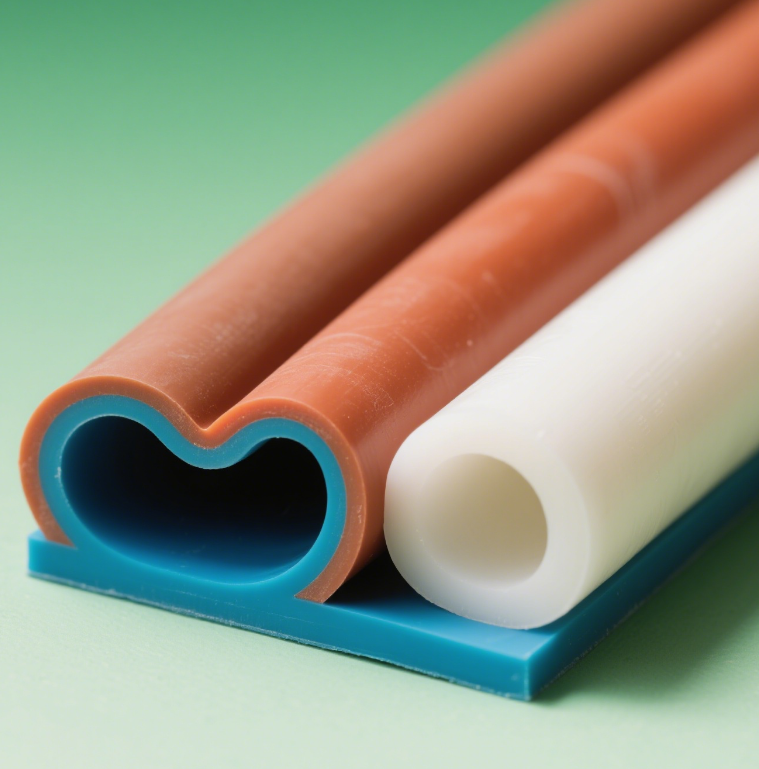
Color-changing flexible materials are the core materials to realize emotional visualization, whose performance directly determines product experience and overall performance. At present, common color-changing flexible materials for electronic skin patches mainly include electrochromic materials and photochromic materials. Electrochromic materials such as conductive polymers including polyaniline and polythiophene, as well as transition metal oxides such as tungsten oxide and nickel oxide, can produce reversible color changes under the action of an electric field. Applied voltage changes their internal electronic structures, adjust light absorption and reflection performance, and thus present different colors. Photochromic materials such as spiropyran and fulgide organic compounds and rare earth doped inorganic materials will undergo molecular isomerization or electron transition under specific light irradiation to change colors and restore the original state after light disappears.
The production and processing of color-changing flexible materials face multiple technical difficulties. In terms of material synthesis, it is necessary to accurately control chemical composition and structural parameters to ensure stable color changing performance. For electrochromic materials, it is required to adjust polymerization degree and doping level to balance conductivity and color changing efficiency; for photochromic materials, molecular structure optimization is needed to improve light response speed and color contrast. In terms of component integration, how to tightly combine flexible color-changing materials with sensors and circuit components while ensuring overall flexibility and stability is a major challenge. Currently, printed electronics and flexible circuit board technologies are widely used, but they still have limitations in high-precision integrated manufacturing. In addition, long-term use may lead to color fading and material aging, which requires optimized material formulas and surface treatment processes to enhance durability.
3.3 Data Processing and Algorithms
The original pulse and electrodermal data collected by sensors contain massive noise and interference. Therefore, a complete data processing process is required to extract valid emotional feature information. Common denoising algorithms include mean filtering, median filtering and Kalman filtering. Mean filtering smoothes data and removes high-frequency noise by calculating regional average values; median filtering eliminates impulse noise through median sorting; Kalman filtering is an optimal estimation algorithm that can track signal changes stably in a noisy environment. After denoising, feature extraction is carried out to obtain core characteristic parameters such as pulse frequency, amplitude, variability and electrodermal response change rate.
The emotion recognition algorithm is based on machine learning and pattern recognition. By collecting and labeling massive physiological signal data under different emotional states, a standard emotional feature database is established. Multiple machine learning models including SVM, artificial neural network and random forest are trained with labeled data to summarize the physiological signal characteristics of different emotions. In actual use, the real-time physiological data collected by the skin patch is imported into the trained model for analysis and matching, so as to judge the user’s emotional state. To improve recognition accuracy and generalization, enterprises need to continuously optimize algorithm parameters, enrich training samples, and integrate behavioral and environmental data for comprehensive analysis.
3.4 Communication and Linkage Technology
The electronic skin patch adopts Bluetooth low-energy technology to realize wireless connection with mobile phones, smart speakers and other terminal devices. As a short-range wireless communication technology, Bluetooth has the advantages of low power consumption, low cost and easy integration, which is highly suitable for wearable devices. The built-in Bluetooth module transmits emotional data, pulse information and electrodermal data to terminal equipment stably following unified communication protocols to ensure data transmission accuracy and equipment compatibility.
Cross-device linkage still faces technical difficulties. In terms of music APP linkage, different applications have inconsistent interface specifications and data formats, which requires adaptive docking development to realize seamless connection and accurate instruction interaction. Meanwhile, it is necessary to optimize music recommendation algorithms to match emotional states with users’ personal music preferences. In terms of smart speaker linkage, environmental noise and voice recognition accuracy restrict interactive effects. It is essential to apply noise suppression algorithms and high-precision voice recognition models to realize low-delay and high-stability voice feedback.
IV. Market Analysis
Research Report on Innovation and Market Potential of Consumer-Grade Emotion-Aware Interactive Electronic Skin Patch
4.1 Market Size and Growth Trend
At present, the consumer electronic skin patch market maintains a rapid growth momentum. According to data released by global market research institutions, the global wearable electronic skin patch market achieved a considerable scale in 2024 and will maintain a high compound annual growth rate in the next few years, driven by rising public health awareness, growing demand for smart wearables and continuous technological iteration.
As an emerging segmented product, the consumer-grade emotion-aware interactive electronic skin patch is still in the initial stage with a small market scale but huge growth potential. With the continuous improvement of public attention to mental health, gradual technological maturity and continuous cost reduction, the market scale will expand rapidly. It is predicted that within 5 to 10 years, the market scale will increase exponentially, with the compound annual growth rate remaining above a high level.
4.2 Target User Groups
The core target user groups of the product are divided into the following categories:
Mental health concerned groups: Affected by high social pressure, such groups pay close attention to psychological changes and have strong demands for real-time emotional monitoring and scientific emotional adjustment.
Technology-oriented consumer groups: They are keen on new intelligent wearable products, pursue innovative technological experience, and are willing to try new interactive products with emotional perception functions.
Office workers: Facing long-term work pressure and interpersonal competition, office workers need to perceive emotional fluctuations in a timely manner to avoid negative emotions affecting work efficiency and team communication.
Sports enthusiasts: They need to monitor emotional changes during exercise, adjust exercise status through emotional feedback, and use music linkage to adjust sports motivation and physical excitement.
4.3 Market Competition Pattern
At present, specialized competitive products of emotion-aware electronic skin patches are scarce in the market, while alternative competitors mainly include traditional smart bands, smart watches and professional health monitoring wearables.
Traditional smart bands and smart watches are equipped with basic heart rate and sleep monitoring functions, and a small number of products add simple emotional analysis modules. However, their emotional judgment is only inferred based on single physiological data such as heart rate, with low accuracy and poor professionalism. Professional health monitoring equipment can collect precise physiological data, but it lacks independent emotion recognition and active emotional adjustment functions.
The core competitive advantages of the emotion-aware interactive electronic skin patch lie in professional multi-dimensional emotion recognition, visualized color feedback and full-scenario intelligent linkage, forming unique differentiated competitiveness. Nevertheless, as an emerging product, it also has disadvantages such as low market awareness, incomplete technical optimization and high comprehensive cost. High product pricing will restrict popularization and restrict market expansion speed in the short term.
V. Application Scenarios and Case Analysis
5.1 Mental Health Monitoring and Intervention
The product has important application value in the field of mental health monitoring. A mental health research institution launched a one-month wearing experiment among employees working in high-pressure environments. The electronic skin patch recorded users’ emotional data in real time and synchronized information to the background management system. Through data analysis, researchers found that most participants showed significantly increased tension and anxiety in the afternoon working hours, which was closely related to task pressure accumulation.
Based on monitoring data, the research institution formulated personalized intervention plans. One-on-one online psychological counseling was arranged for groups with severe negative emotions, and relaxation audio and meditation guidance videos were regularly pushed to all participants. After one month of intervention, the overall anxiety and tension levels of participants decreased significantly, and their emotional state became more stable. It proves that the emotion-aware electronic skin patch can provide effective data support for mental health monitoring and timely psychological intervention.
5.2 Daily Emotional Management
In daily life scenarios, ordinary users can realize effective self-emotion management through the product. For example, a young working mother suffers from long-term dual pressure from work and family care, and is prone to anxiety and irritability. After wearing the electronic skin patch, she can intuitively grasp her emotional state through color feedback. When the system detects anxiety, the mobile music APP automatically plays soothing pure music to relieve pressure; when she feels irritable while taking care of her children at night, the smart speaker will send gentle soothing reminders to help her calm down. After long-term use, her emotional control ability is significantly improved, and negative emotions are effectively relieved.
Another typical user is a college student facing heavy examination pressure. During the preparation period, he is prone to emotional fluctuations and learning anxiety. By observing the real-time color changes of the skin patch, he adjusts his learning rhythm in a timely manner: he stops learning to stretch and listen to relaxing music when in tension, and resumes efficient learning after his mood stabilizes. With this auxiliary adjustment method, he maintains a stable learning state and finally achieves ideal examination results. The above cases verify the practical effectiveness of the product in daily emotional management.
5.3 Smart Office and Learning Scenarios
In smart office scenarios, the product helps optimize employees’ working status and improve overall work efficiency. An Internet enterprise equipped its employees with emotion-aware electronic skin patches. When employees are in a state of high tension and anxiety, the system will automatically delay the push of urgent tasks to avoid operational errors caused by emotional instability. The enterprise summarizes employees’ emotional change rules in different working periods through big data analysis, and optimizes task allocation and work schedule. After practical application, employees’ average work efficiency is significantly improved, the error rate is reduced, and overall job satisfaction is enhanced.
In learning scenarios, the product assists classroom teaching and daily learning management. In an experimental class of a middle school, students wear electronic skin patches during class. Teachers can view students’ real-time emotional data through the teaching management platform, and timely adjust teaching rhythm and organize interactive activities when students have negative emotions such as boredom and irritability. After long-term application, students’ learning initiative and classroom concentration are significantly improved, and their academic performance is steadily enhanced, which helps build a positive learning atmosphere.
VI. Development Challenges and Countermeasures
6.1 Technical Difficulties
In terms of sensor performance, although existing pulse and electrodermal sensors can collect basic physiological signals, it is still difficult to identify subtle emotional differences accurately. Individual physical differences, daily activities and environmental changes such as temperature and humidity will interfere with signal acquisition and lead to recognition errors. To solve this problem, it is necessary to optimize sensor structure and materials, enhance weak signal capture capability and anti-interference performance, and adopt multi-sensor fusion technology to integrate multiple physiological indicators to improve recognition accuracy.
Data processing efficiency is another key technical bottleneck. The electronic skin patch will generate a large amount of real-time physiological data during long-term wearing. Limited by hardware performance and algorithm efficiency, real-time analysis and rapid feedback are faced with delays and computing pressure. The solutions include optimizing lightweight data processing algorithms, reducing computing complexity, upgrading embedded microprocessors, and improving real-time data operation and analysis capability.
6.2 Market Acceptance
At present, consumers have low cognition of this new type of electronic skin patch. Most users lack understanding of product principles, core functions and practical value, resulting in low purchase intention. Meanwhile, some consumers have concerns about skin comfort, material safety and skin allergy risks caused by long-term pasting. In addition, many users hold the view that emotional adjustment belongs to subjective self-regulation and question the necessity of relying on intelligent hardware products.
To improve market acceptance, enterprises need to strengthen popular science and market promotion. Relying on social media, technology exhibitions and health popular science activities to publicize product functions and application values. Invite industry experts and opinion leaders to conduct product popularization and evaluation to enhance user trust. Optimize product material design, adopt skin-friendly, breathable and hypoallergenic flexible materials to improve wearing comfort and safety. Collect user feedback continuously, optimize product functions, and launch personalized customized services to enrich product value.
6.3 Regulatory and Ethical Issues
As an innovative wearable intelligent device, the emotion-aware interactive electronic skin patch faces incomplete industry supervision standards and regulatory constraints. The product involves direct skin contact, electronic safety and biological compatibility, while the national unified industry access standard for emotional perception wearable devices has not yet been fully improved, bringing uncertain risks to product research and development and market listing.
In terms of ethics, the emotional data collected by the product belongs to users’ sensitive personal privacy. Improper data storage and transmission will easily lead to privacy leakage and information abuse. At the same time, limited by technical levels, emotion recognition may be misjudged, and inappropriate emotional guidance caused by wrong identification may bring negative psychological impacts to users.
In response, enterprises should actively cooperate with regulatory authorities, participate in the formulation of industry standards, and strictly abide by safety production and material use specifications. Establish a complete data security protection system, adopt end-to-end encryption technology for data storage and transmission, and clarify data access authority. Fully inform users of data collection scope and usage rules in the product agreement. Standardize product publicity, objectively explain the limitations of emotion recognition technology, and avoid excessive functional exaggeration.
VII. Future Development Trends and Prospects
7.1 Technological Innovation Direction
In the future, sensor technology will develop towards miniaturization, high sensitivity and multi-modal integration. Nano-sensor technology will be widely used to capture ultra-subtle physiological changes and realize high-precision identification of mild emotional fluctuations. Multi-dimensional fusion monitoring of brain electricity, respiration, pulse and skin electricity will become a mainstream trend, greatly improving the comprehensiveness and accuracy of emotion recognition.
Material innovation will focus on high response speed, rich color presentation and long-term durability. New composite color-changing flexible materials will realize faster color switching and more delicate emotional grading display. Self-healing flexible materials and biodegradable environmentally friendly materials will be developed to enhance product durability, skin safety and environmental friendliness.
In terms of algorithms, with the iteration of artificial intelligence technology, deep learning and neural network models such as Transformer will be widely used in emotional data analysis. Combined with reinforcement learning, the equipment can independently optimize recognition models according to user habits and scene characteristics to realize personalized emotional perception. Edge computing technology will also be popularized to complete local data processing, reduce transmission delay and realize instant emotional feedback.
7.2 Market Expansion and Application Expansion
The product will realize large-scale expansion in the global market. With the continuous rise of mental health demand in developing countries and emerging markets, the market coverage will be further improved. Enterprises will expand sales channels through cooperation with medical institutions, health management platforms and digital retailers to realize global market layout.
In terms of application scenarios, on the basis of existing daily use, office and education scenarios, the product will further expand to medical rehabilitation, entertainment and games, social interaction and other fields. In the medical field, it can serve as an auxiliary monitoring tool for patients with depression, anxiety and chronic diseases to assist doctors in psychological intervention and chronic disease management. In the entertainment industry, it can be combined with VR and AR technology to adjust game atmosphere and plot according to players’ emotions and enhance immersive experience. In social scenarios, emotional visualization will help narrow interpersonal distance and promote harmonious communication.
7.3 Industrial Impact and Reform
The popularization of emotion-aware interactive electronic skin patches will bring profound changes to the consumer electronics and mental health industries. For the consumer electronics industry, it promotes the transformation of wearable devices from single health monitoring to human-oriented emotional interaction, expands the functional boundary of intelligent wearables, and drives the collaborative development of upstream and downstream industries such as flexible materials, intelligent sensors and emotional algorithm software, accelerating the overall upgrading of the consumer electronics industry.
For the mental health industry, it builds a new real-time emotional monitoring and data-driven intervention model. Massive continuous emotional data helps psychological researchers explore emotional change rules, promote mental health services to transform from passive treatment to active prevention, and realize personalized and accurate psychological health management. At the same time, the product enhances public attention to mental health, promotes the popularization of mental health knowledge, and creates a good social atmosphere focusing on psychological health.
VIII. Conclusions and Recommendations
8.1 Research Conclusions
The consumer-grade emotion-aware interactive electronic skin patch, as an innovative wearable consumer electronic product, has outstanding innovation and huge development potential. It adopts inner wrist wearing design, captures pulse and electrodermal signals through high-precision sensors, and uses machine learning algorithms to realize accurate emotion recognition. With the support of color-changing flexible materials and intelligent terminal linkage, it realizes emotional visualization and portable emotional adjustment.
From the market perspective, driven by the continuous growth of public mental health demand, the product has diversified target user groups and broad market prospects. Although restricted by technical bottlenecks, low market awareness and high cost at this stage, it will achieve rapid development with technological optimization and market popularization. In terms of practical application, it has shown good application effects in mental health intervention, daily emotional management, smart office and smart learning scenarios, with high practical value and promotion significance.
8.2 Suggestions for Enterprises and Investors
Enterprises should increase investment in core technology research and development, break through the bottlenecks of sensor anti-interference and data processing algorithms, and improve emotion recognition accuracy and product stability. Optimize product design, focus on wearing comfort and skin safety, and improve user experience. Strengthen brand building and multi-channel market promotion, enhance product popularity, and accelerate market education and user cultivation. Actively carry out cross-industry cooperation with medical treatment, education, entertainment and other fields to enrich application scenarios and enhance market competitiveness.
For investors, the emotion-aware electronic skin wearable track is in the early growth stage with high long-term investment value. It is recommended to focus on enterprises with independent core technology, complete R&D system and innovative capability. Fully assess the technical risks, market acceptance risks and cost constraints of the industry, conduct in-depth market research, and formulate rational investment layouts and risk control strategies.
8.3 Research Limitations and Future Research Directions
This research still has certain limitations. Due to the difficulty in obtaining complete industry data, there are certain deviations in market scale and growth forecast. Long-term follow-up research on user experience and product practical effect is insufficient. The research on industry regulations and ethical risks is not comprehensive enough due to the imperfect supporting system of relevant industry standards.
Future research can further optimize emotion perception indicators and identification algorithms to improve recognition accuracy. Carry out long-term large-scale user follow-up experiments to supplement practical data support for product iteration. Continuously pay attention to the dynamic formulation of industry laws and regulations, and improve the research system of privacy protection and ethical norms. Further explore the commercial operation mode and innovative application scenarios of the product, so as to provide more sufficient theoretical support for the large-scale popularization and sustainable development of emotion-aware interactive electronic skin patches.