I. Introduction
1.1 Research Background and Significance
In the medical field, effective monitoring of wound healing has always been a critical part of clinical treatment. The wound healing process is complex and affected by multiple factors, including infection, blood circulation, and nutritional status. Traditional wound monitoring methods mainly rely on physicians’ visual inspection and palpation assessment. Such approaches are highly subjective and struggle to obtain real-time, comprehensive data throughout wound healing. They also hinder the early detection and timely intervention for potential infection risks and abnormal healing.
For instance, in the treatment of various wounds such as surgical incisions, diabetic foot ulcers, and burn and scald wounds, delayed monitoring frequently leads to wound deterioration. This not only prolongs patients’ recovery cycles, increases their suffering and medical costs, but may also trigger severe complications and threaten patients’ life and health.
The emergence of innovative electronic skin for wound healing monitoring offers a new solution to the above problems. It enables dynamic tracking of the entire wound healing cycle, compensates for the limitations of traditional monitoring methods, and helps physicians accurately assess wound conditions and adjust treatment plans promptly. It carries important research value and clinical significance for improving treatment outcomes and accelerating patient recovery.
1.2 Research Objectives and Methods
This report aims to conduct a comprehensive and in-depth study on medical-grade electronic skin for wound healing monitoring, analyzing its technical principles, performance characteristics, application scenarios, and market prospects.
Adopting the literature research method, this study extensively collects domestic and foreign academic papers, patent documents, and industry reports on electronic skin and wound monitoring technologies to sort out technological development trajectories and clarify current research status and trends. The case analysis method is applied to select typical R&D and clinical application cases of electronic skin, so as to analyze their technological innovations, application effects, and existing deficiencies. The expert interview method is utilized to communicate with scientific researchers and clinicians specializing in electronic skin, obtaining professional opinions and suggestions to ensure the scientificity and practicality of the research.
1.3 Innovation Points and Core Differences
The core advantage of this wound healing monitoring electronic skin lies in its focus on full-cycle dynamic tracking of wound healing, rather than simple physiological monitoring.
In terms of innovation, it features a flexible and conformable design that closely adheres to wound dressings, minimizing additional irritation to wounds and creating a favorable healing environment. It is capable of real-time monitoring of wound humidity, pH value, and inflammatory factor concentrations, with data synchronized to a physician-side APP via Bluetooth to realize real-time data transmission and remote monitoring. The system can automatically issue early warnings for infection risks once abnormal monitoring data is detected, allowing physicians to take targeted measures in a timely manner.
In the late healing stage, the electronic skin can sense skin tension and remind patients to avoid excessive activities that may cause wound dehiscence, providing all-round protection for complete wound recovery. Furthermore, the electronic skin is biodegradable after healing, eliminating the need for secondary peeling and secondary tissue damage, which greatly enhances patient comfort and experience.
II. Industry Overview of Wound Healing Monitoring Electronic Skin
2.1 Industry Development History
The concept of electronic skin first originated from science fiction works. In 1972, the novel Cyborg envisioned replacing human organs with machinery. Later, film and television productions such as Star Wars Episode V: The Empire Strikes Back and The Terminator depicted mechanical limbs with tactile perception and self-healing capabilities, sparking research interest in electronic skin among scientists.
From the 1980s to the 1990s, researchers attempted to simulate skin functions using rigid sensors and circuits, yet their lack of flexibility and stretchability severely limited practical applications. After 2000, the rise of flexible electronics laid the foundation for the advancement of electronic skin. In 2004, researchers developed electronic skin capable of sensing pressure and temperature using pentacene thin films, marking a major milestone in electronic skin research.
Subsequently, the application and advancement of nanomaterials and microfabrication technologies significantly accelerated the development of electronic skin. After 2010, multi-functional sensors for pressure, temperature, humidity and other indicators were integrated into a single flexible platform, greatly improving the sensitivity and resolution of electronic skin.
In the field of wound healing monitoring, early research primarily focused on combining electronic skin with wound dressings to achieve basic physiological parameter monitoring. For example, in 2019, researchers from Binghamton University, State University of New York developed high-performance electronic skin for long-term, real-time monitoring of wound status, which could detect lactic acid and oxygen levels on the skin surface.
In recent years, breakthroughs in materials science, nanotechnology, and digital health have driven the continuous upgrading of wound monitoring electronic skin. Modern products can monitor more indicators and support real-time data transmission, intelligent analysis, and automatic early warning. A typical example is the “smart bandage” jointly developed by the Keck School of Medicine of the University of Southern California and the California Institute of Technology, which can automatically detect internal wound changes, deliver drugs and treatment on demand, and send Bluetooth alerts to medical staff.
2.2 Current Status Analysis
At present, wound healing monitoring electronic skin has achieved notable progress in both technology and market development.
Technically, to meet the requirements of flexible conformability, biocompatibility, and biodegradability, materials including hydrogels, nanomaterials, and biodegradable polymers have been widely researched and applied. Hydrogels possess excellent hydrophilicity and biocompatibility, maintaining a moist wound microenvironment to facilitate healing while serving as ideal sensor carriers. Nanomaterials such as graphene and carbon nanotubes exhibit superior electrical and mechanical properties, effectively boosting sensor sensitivity and stability.
In terms of sensor integration, beyond conventional indicators including wound humidity, pH value, and inflammatory factor concentrations, cutting-edge electronic skin products integrate advanced sensors to detect exudate components such as protein and glucose, enabling a more comprehensive evaluation of wound healing.
In the market, wound healing monitoring electronic skin is still in the early development stage but has attracted extensive attention from the medical industry. A number of research institutions and enterprises have launched relevant products or advanced to clinical trials. Its clinical applications mainly cover chronic wounds (e.g., diabetic foot ulcers, pressure ulcers), surgical incisions, and burn wounds.
Nevertheless, the industry still faces prominent challenges: high production costs hinder large-scale popularization; the stability and reliability of some products require further verification, with monitoring errors likely to occur in complex wound environments; in addition, data transmission security and patient privacy protection need to be further strengthened to prevent information leakage.
2.3 Market Scale and Trend Forecast
Driven by population aging, the growing prevalence of chronic diseases, and rising public awareness of healthcare, the market demand for wound healing monitoring electronic skin will continue to expand.
According to data from relevant market research institutions, the global electronic skin market has maintained rapid growth in recent years. From 2020 to 2025, the market size expanded from 2.9 billion US dollars to 7.5 billion US dollars, with a compound annual growth rate of approximately 16.4%. As a key application segment, wound healing monitoring electronic skin accounts for an increasingly larger market share. It is projected to sustain rapid growth over the next 5 to 10 years.
Three major trends will shape the industry:
First, continuous technological innovation will drive market expansion. Advancements in multimodal sensing technology, self-healing materials, and AI data analysis will enable more precise and comprehensive monitoring, improving product performance and added value.
Second, application boundaries will keep expanding. Beyond traditional clinical medical scenarios, the technology will extend to home care and sports rehabilitation. It will allow patients to conduct self-monitoring at home and realize remote diagnosis via telemedicine, while helping sports medicine professionals assess sports injuries and formulate personalized rehabilitation plans.
Third, large-scale production and technological optimization will gradually reduce costs, further stimulating market demand and accelerating the commercialization of electronic skin products.
III. Analysis of Key Technologies for Medical-Grade Wound Healing Monitoring Electronic Skin
3.1 Flexible Conformable Technology
3.1.1 Material Selection
Diversified special materials are adopted to realize the flexible fitting of the electronic skin.
As a core material, hydrogel features high water content similar to human tissue and favorable biocompatibility, enabling gentle contact with wound surfaces and reduced irritation. For example, polyacrylamide hydrogels contain abundant hydrophilic groups, endowing outstanding flexibility and stretchability to adapt to dynamic skin deformation such as joint bending and stretching, while maintaining a moist microenvironment conducive to wound healing.
Nanomaterials represented by graphene and carbon nanotubes are also widely adopted. Graphene delivers excellent electrical conductivity, ultra-high mechanical strength, and flexibility. Its two-dimensional planar structure enables uniform dispersion in flexible substrates, enhancing the conductivity and structural stability of electronic skin. Carbon nanotubes feature a unique tubular structure and high aspect ratio, constructing efficient conductive networks and maintaining stable electrical performance under stretching and bending for reliable signal transmission on complex skin surfaces.
Biodegradable polymers including Polylactic Acid (PLA) and Polycaprolactone (PCL) are widely applied as well. PLA boasts good biocompatibility and mechanical properties, achieving complete degradation in human body fluids within 6 months to 2 years. With an elastic modulus close to human skin, it serves as an ideal substrate material, providing stable support during healing and natural degradation without secondary removal after wound recovery.
3.1.2 Structural Design
A specialized structural design ensures seamless fitting with wounds.
The “island-bridge” structure is a mainstream design, in which rigid sensing components (islands) are connected to flexible substrates via stretchable elastic connectors (bridges). This structure allows the substrate to withstand large strain up to 500% while keeping sensors stably operational, ensuring close skin contact and anti-interference against skin deformation. It is particularly suitable for joint areas, enabling free deformation with limb movement and continuous accurate monitoring.
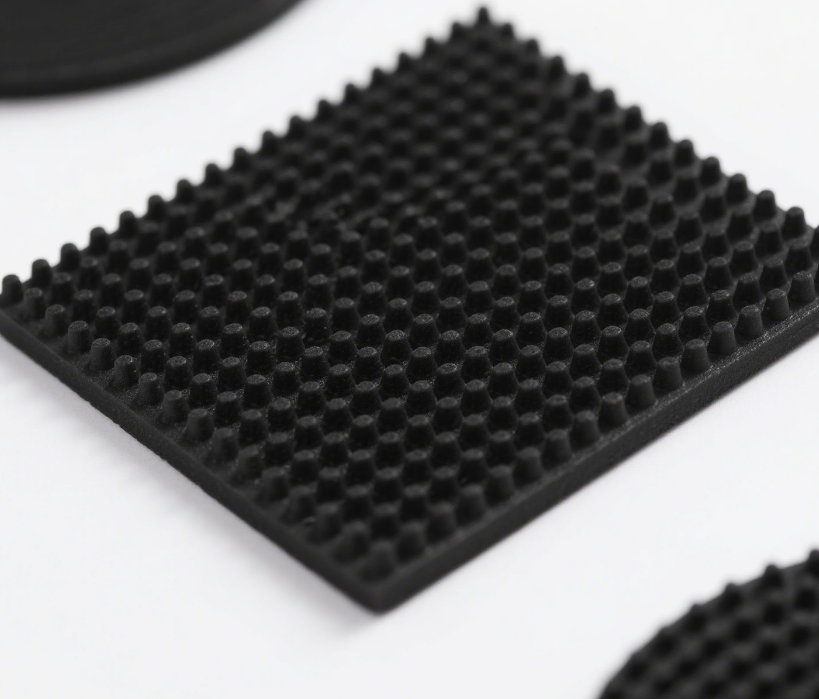
In addition, bionic structural design is adopted to mimic the layered structure and micro-texture of human skin. Macroscopically, the multi-layer bionic structure enhances flexibility and environmental adaptability. Microscopically, micro-nano protrusions and grooves increase friction and adhesion between electronic skin and wound dressings, reducing displacement and falling-off risks, while improving the sensitivity of skin stress perception.
3.2 Real-Time Multi-Parameter Monitoring Technology
3.2.1 Humidity Monitoring Principle
Real-time wound humidity monitoring is realized through capacitive or resistive sensing mechanisms.
Capacitive humidity sensors operate based on the dielectric constant variation of moisture-sensitive materials under different humidity conditions. The capacitive structure consists of two parallel electrodes and an intermediate moisture-sensitive material. Changes in wound humidity cause the material to absorb or release moisture, altering the dielectric constant and capacitance values. Accurate humidity data can be obtained through signal calibration and data processing.
Resistive humidity sensors rely on the resistance-humidity correlation of hydrophilic conductive materials. Composite materials such as graphene oxide-polymer maintain stable conductive pathways and high resistance in low-humidity environments. With increased humidity, absorbed water molecules form additional conductive channels and reduce resistance. Humidity information is collected by measuring resistance changes. This solution features a simple structure and low cost, suitable for large-scale application in electronic skin.
3.2.2 pH Monitoring Principle
The pH monitoring technology of electronic skin is mainly based on electrochemical principles, with ion-selective electrodes (ISE) such as hydrogen ion-selective electrodes as the core components.
The sensitive membrane of hydrogen ion-selective electrodes exhibits specific selective response to hydrogen ions. When attached to wound surfaces, the membrane contacts wound exudate, and ion exchange occurs between hydrogen ions and the membrane, generating a potential difference on both sides of the membrane. This potential difference follows the Nernst equation and has a quantitative functional relationship with hydrogen ion concentration (pH value). Wound pH values can be accurately calculated through potential difference measurement and formula conversion.
To improve detection accuracy and stability, a reference electrode is integrated to form a complete electrochemical cell, providing stable potential reference and reducing environmental interference. Sensor calibration and temperature compensation are also essential, as temperature fluctuations affect ion activity and electrode performance, ensuring accurate pH detection in complex environments.
3.2.3 Inflammatory Factor Concentration Monitoring Principle
Biosensor technology, especially electrochemical immunosensors based on immune reactions, is widely used for inflammatory factor detection.
The core mechanism relies on the specific binding of antigens and antibodies. Antibodies targeting specific inflammatory factors (e.g., IL-6, TNF-α) are immobilized on electrode surfaces. When inflammatory factors in wound exudate bind to the fixed antibodies, antigen-antibody complexes form and change the electrochemical properties of the electrode surface, including charge distribution and electron transfer rate.
By detecting changes in current, potential or impedance, combined with standard curves and data algorithms, the concentration of inflammatory factors can be quantitatively analyzed. Nanomaterial electrode modification is adopted to enhance antibody immobilization capacity and biological activity, improving detection sensitivity and specificity for low-concentration inflammatory factors, so as to provide reliable evidence for evaluating wound inflammation status.
3.3 Infection Risk Early Warning Mechanism
3.3.1 Data Transmission and Processing
The electronic skin transmits real-time monitoring data including wound humidity, pH value and inflammatory factor concentration to the physician-side APP via Bluetooth. Bluetooth technology features low power consumption and stable short-distance transmission, meeting the data transmission needs of medical wearable devices. Encryption algorithms are adopted for data transmission to protect patient privacy and prevent data theft or tampering.
After data reception, the APP conducts preprocessing such as data cleaning and denoising to eliminate abnormal signals caused by sensor noise and signal interference. Further in-depth data analysis is performed via professional algorithms. Combined with physiological wound healing models and clinical big data, a correlation model between monitoring indicators and infection risks is established. Machine learning algorithms are used to train historical data, identify infection probability characteristics under different parameter combinations, and achieve accurate risk assessment.
3.3.2 Early Warning Threshold Setting
Reasonable threshold setting is the core of infection early warning, with comprehensive consideration of clinical physiological characteristics.
For humidity, the normal wound healing humidity range is fixed; persistent humidity above 80% RH is proven to significantly increase infection risks, thus 80% RH is set as the upper limit warning threshold.
For pH value, normal wound exudate is weakly alkaline (7.2–7.4). Sustained pH below 7.0 or above 7.6 indicates microenvironment imbalance and potential infection risks, with 7.0 and 7.6 set as the lower and upper warning thresholds respectively.
For inflammatory factors, targeted thresholds are formulated based on clinical research. Taking IL-6 as an example, a concentration exceeding 10 pg/mL indicates aggravated inflammation or potential infection, which is defined as the early warning threshold. Scientific threshold settings enable timely and accurate infection risk alerts for clinical intervention.
3.4 Skin Tension Sensing Technology
3.4.1 Sensing Principles and Methods
Skin tension is detected through piezoresistive or capacitive sensing technology.
Piezoresistive sensors form conductive networks by embedding conductive fillers (carbon nanotubes, graphene, etc.) into flexible materials. Tension-induced material deformation changes the distance between conductive fillers and adjusts resistance values. Tension magnitude and direction are identified through real-time resistance monitoring.
Capacitive sensors consist of parallel electrodes and elastic dielectric materials. Skin tension deformation changes electrode spacing or dielectric constant, leading to capacitance variation. High-precision capacitance detection circuits capture subtle capacitance changes to obtain tension data. Temperature compensation, signal amplification and filtering technologies are integrated to enhance detection stability and anti-interference capability.
3.4.2 Impacts and Functions on Wound Healing
In the late healing stage, excessive skin tension caused by strenuous activity may lead to wound dehiscence, delayed recovery and secondary infection.
The electronic skin monitors skin tension in real time and sends reminders to patients via the physician-side APP when tension exceeds the safe threshold, guiding patients to adjust movement intensity and posture. This maintains a stable mechanical environment for wounds, prevents dehiscence, and improves healing quality, which is especially critical for post-surgical wound management.
3.5 Biodegradable Properties and Implementation
3.5.1 Application of Degradable Materials
Biodegradable materials for electronic skin are divided into natural macromolecular materials and synthetic degradable polymers.
Natural materials such as sodium alginate and chitosan have excellent biocompatibility and biodegradability. Sodium alginate, extracted from algae, can be enzymatically degraded into harmless small molecules in vivo. Chitosan features antibacterial properties and promotes cell adhesion and proliferation, while achieving gradual degradation in biological environments.
Synthetic degradable polymers including PLA and PCL are widely used. PLA degradation products (lactic acid) participate in human metabolism with no toxic side effects. PCL features a slow and adjustable degradation rate to match different wound healing cycles. Novel degradable copolymers such as PHB also show broad application prospects in electronic skin research.
3.5.2 Degradation Process and Safety
The degradation of biodegradable materials relies on hydrolysis or enzymatic reactions, which gradually break polymer chains into small molecular fragments. For example, PLA is hydrolyzed by in vivo esterase into lactic acid, which is further decomposed into carbon dioxide and water for excretion. Sodium alginate is degraded into oligosaccharides and monosaccharides for human absorption and metabolism.
Repeated experimental and clinical verification has confirmed that degradation products have no obvious toxicity or irritation to human cells and tissues. The material degradation cycle is precisely matched with the wound healing cycle to avoid long-term residual substances in the body. Strict control of impurities and additives during production further ensures the biosafety of the electronic skin throughout degradation.
IV. Clinical Application Case Analysis
4.1 Case 1: Clinical Practice of Shaoguan First People’s Hospital
4.1.1 Patient Profile and Treatment Process
The patient was a 56-year-old male with large-area leg skin lacerations caused by a traffic accident. The wound measured approximately 15cm×10cm, involving subcutaneous tissue and partial muscle damage. After debridement, medical-grade wound monitoring electronic skin was applied to the wound dressing for continuous real-time parameter monitoring. Medical staff tracked dynamic changes in wound humidity, pH value and inflammatory factor concentrations through the dedicated APP.
4.1.2 Monitoring Data and Treatment Outcomes
In the early healing stage, wound humidity remained at 75%–80% RH with a slightly acidic pH of 6.8–7.0 and an IL-6 concentration of 8 pg/mL. With standardized treatment, humidity stabilized at 60%–65% RH from Day 5 to Day 7, pH returned to the normal range of 7.2–7.4, and inflammatory factor levels decreased gradually. In the late stage, the tension sensing function reminded the patient to restrict excessive movement.
Benefiting from precise monitoring and personalized treatment adjustment, the wound healed well without complications. The overall healing cycle was shortened by 3 to 5 days compared with traditional treatment, with complete recovery of skin tissue functions within two weeks.
4.2 Case 2: Clinical Practice of Urumqi Economic and Technological Development Zone (Toutunhe District) First People’s Hospital
4.2.1 Patient Profile and Treatment Process
The 70-year-old female patient suffered from foot ulcers complicated by diabetes. The ulcer measured 5cm×3cm with deep lesions involving the muscle layer. Poor blood circulation caused by diabetes greatly increased healing difficulty. After blood glucose regulation, wound monitoring electronic skin was applied for full-cycle monitoring. Medical staff adjusted medication and dressing replacement plans timely based on real-time APP data.
4.2.2 Monitoring Data and Treatment Outcomes
Early monitoring revealed unstable humidity (70%–85% RH), acidic pH (6.5–6.8), and a high TNF-α concentration of 12 pg/mL, indicating aggravated inflammation risks. Targeted anti-infection treatment and optimized dressing management were implemented accordingly. Subsequently, wound humidity stabilized at 65%–70% RH, pH recovered to around 7.2, and inflammatory factors decreased significantly. Tension reminders restricted excessive walking during recovery.
After over one month of systematic treatment, the foot ulcer healed completely, avoiding the risk of diabetic amputation. The patient’s quality of life was significantly improved with remarkable clinical efficacy.
4.3 Case Summary and Experience Reference
The two clinical cases verify the outstanding performance of medical-grade wound healing monitoring electronic skin in the treatment of different types of wounds. It provides comprehensive, real-time and objective data support for clinical decision-making, enabling early infection prevention and precise treatment.
Wound Healing Monitoring Electronic Skin
Key experience for clinical promotion includes: clinicians should attach importance to electronic skin monitoring data and respond actively to early warning information; individualized treatment plans should be formulated by combining monitoring indicators with patients’ underlying diseases and physical conditions, so as to maximize the advantages of intelligent monitoring technology and optimize clinical treatment outcomes.
V. Comparative Advantages Over Traditional Wound Monitoring Methods
5.1 Comprehensive Monitoring Comparison
Traditional monitoring relies solely on visual inspection and palpation, which can only observe superficial wound characteristics such as color, size, exudation, skin temperature and swelling. It cannot detect micro indicators including internal humidity, pH value and inflammatory factor levels, resulting in one-sided assessment of wound conditions.
In contrast, electronic skin realizes multi-dimensional full-parameter monitoring. It quantitatively evaluates wound exudation via humidity detection, identifies microenvironment imbalance through precise pH monitoring, and assesses inflammatory response at the molecular level via inflammatory factor detection. This multi-angle monitoring system enables physicians to fully grasp internal and external wound conditions for more accurate treatment judgment.
5.2 Timeliness and Accuracy Comparison
Traditional monitoring is performed only during regular ward rounds, lacking real-time performance. Subjective judgment is easily affected by physicians’ clinical experience, leading to missed early infection signs and delayed treatment.
Wound healing monitoring electronic skin supports 24-hour continuous real-time data transmission and automatic abnormal early warning, ensuring timely capture of subtle wound changes. Equipped with high-precision sensors and standardized algorithms, it avoids human subjective errors and achieves quantitative, objective and accurate detection of physiological indicators, far exceeding the accuracy of traditional manual assessment.
5.3 Patient Experience and Treatment Effect Comparison
Frequent palpation and visual inspection in traditional monitoring may cause pain and discomfort to patients, and repeated operations will disrupt the stable wound microenvironment and affect healing.
The flexible and lightweight electronic skin fits wounds gently without additional irritation. Its biodegradable design eliminates secondary peeling pain and greatly improves patient comfort. Clinically, accurate data support optimizes treatment plans, reduces complication rates, accelerates wound healing, and delivers better long-term treatment outcomes than traditional monitoring modes.
VI. Challenges and Countermeasures
6.1 Technical Challenges
6.1.1 Improvement of Sensor Precision and Stability
Sensor performance is vulnerable to material aging, complex wound exudate environments, and temperature fluctuations, resulting in reduced precision and signal drift. Differences in manufacturing processes also lead to inconsistent product performance.
Countermeasures include developing high-performance anti-interference sensitive materials, optimizing micro-nano processing technology to standardize production accuracy, and integrating adaptive environment compensation algorithms to dynamically correct monitoring data and ensure long-term stable operation in complex wound environments.
6.1.2 Resolution of Signal Interference and Transmission Issues
Electromagnetic interference from medical equipment and limited Bluetooth transmission distance easily cause signal distortion, interruption and attenuation.
Solutions involve adding electromagnetic shielding structures to circuit design, optimizing Bluetooth frequency hopping transmission protocols to enhance anti-interference capability, developing low-power long-distance wireless modules, and combining multi-mode wireless communication technologies such as Wi-Fi and ZigBee to ensure stable data transmission. Signal enhancement algorithms are also adopted to repair attenuated signals.
6.2 Clinical Application Challenges
6.2.1 Operational Training for Medical Staff
The integrated technology of electronic skin leads to complex operations, while the existing medical training system lacks systematic courses for intelligent wearable medical devices, resulting in insufficient operational proficiency among medical staff.
Countermeasures: Enterprises and medical institutions should jointly develop standardized training systems covering basic principles, operational specifications, fault troubleshooting and case analysis. Diversified training methods including online courses, on-site demonstrations and simulated training are adopted, together with long-term technical support mechanisms to improve professional capabilities of medical staff.
6.2.2 Improvement of Patient Acceptance and Compliance
Patients’ concerns about safety, skin discomfort caused by wearing, and privacy worries restrict the popularization of electronic skin.
Countermeasures: Strengthen doctor-patient communication to popularize product principles and safety verification data; optimize material comfort and product ergonomic design; establish strict data encryption and privacy protection mechanisms; and provide psychological intervention to relieve patients’ concerns.
6.3 Market Promotion Challenges
6.3.1 Cost Control and Price Optimization
High R&D investment, sophisticated micro-nano manufacturing processes, and long clinical approval cycles push up production and time costs, resulting in high product prices that restrict large-scale promotion.
Countermeasures: Strengthen university-enterprise cooperation to share R&D resources; realize cost reduction through process optimization and large-scale centralized production; establish long-term supplier cooperation to reduce raw material costs; and adopt flexible sales models such as leasing and installment payment to lower the threshold of medical use.
6.3.2 Market Cognition and Competition Coping
Low market awareness, inherent reliance on traditional monitoring methods, and intensifying industry competition hinder market expansion. Counterfeit low-quality products also disrupt the market order.
Countermeasures: Increase multi-channel market promotion through medical exhibitions and academic conferences to enhance industry recognition; strengthen in-hospital clinical promotion to accelerate scenario penetration; consolidate technological innovation and differentiated competitive advantages; strengthen brand building and market supervision to curb unfair competition.
VII. Conclusion and Prospect
7.1 Research Summary
Medical-grade wound healing monitoring electronic skin presents comprehensive technical and clinical advantages. Its flexible conformable materials and bionic structural design ensure safe and comfortable wound fitting. Real-time multi-parameter sensing technology realizes quantitative monitoring of core wound indicators. The infection early warning system, skin tension perception function and biodegradable design form a full-cycle intelligent wound management solution.
Clinical cases confirm that this technology can effectively shorten healing cycles, prevent infectious complications, and improve patient prognosis. Compared with traditional monitoring methods, it achieves comprehensive, timely and accurate wound assessment, bringing innovative changes to clinical wound management.
7.2 Future Development Prospects
- Material Upgrade: Develop high-sensitivity self-healing materials and precisely controllable biodegradable materials to adapt to diverse wound treatment needs and extend service life.
- Functional Integration: Integrate on-demand drug release, intelligent pain relief and multi-index joint detection functions; combine artificial intelligence to realize intelligent prediction of healing trends and automatic personalized treatment recommendations.
- Scenario Expansion: Further expand to home care, telemedicine, sports rehabilitation and community medical services to build a full-scenario wound health management system and improve the equitable allocation of medical resources.