











Artificial Skin and Electronic Skin
2026/04/27
0
I. Core Performance: Ultimate Bionics & Durability
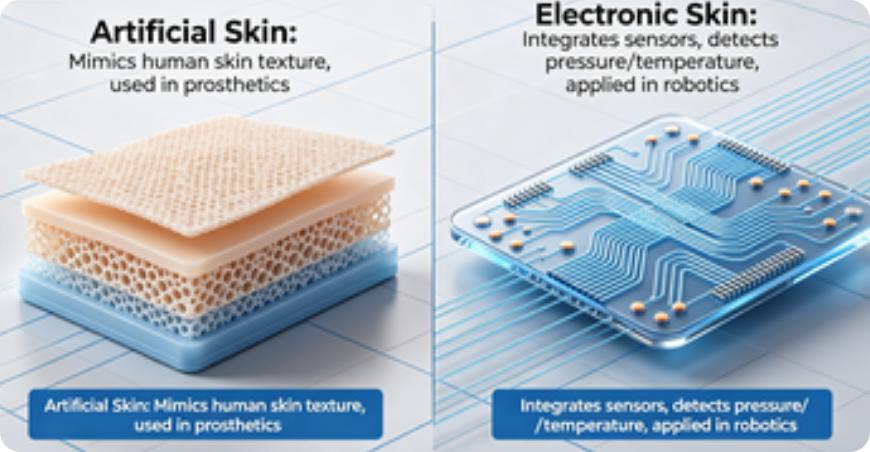
e-skin
Biomechanical matching with human skin: The elastic modulus is reduced to 0.01–1 MPa (close to dermis), with an overall elongation at break exceeding 300% and over 500% at joint areas. With a Shore hardness of 0A–5A, it delivers a smooth, mild and non-sticky tactile sensation.
Universal self-healing performance: Adopting dynamic covalent bond / ionic crosslinking systems, it achieves 90%–98% room-temperature healing efficiency, with scratches self-repairing within 10 to 30 minutes. The bending lifespan exceeds 200,000 cycles, meeting the long-term interaction needs of humanoid robots.
Ultra-thin and lightweight design: Thickness is lowered from 100–500 μm to 10–50 μm, with a density below 0.2 g/cm³, effectively reducing motion energy consumption.
II. Material System: Compound & Bio-Based Development
Silicone-based materials (Silicone / PDMS): The core high-end bionic material. Composited with nano-silica / carbon nanotubes, it addresses bottlenecks including low mechanical strength and difficult sensor integration. Si-TPV has emerged as a popular alternative, combining the soft touch of silicone with the excellent processability of TPU.
Polyurethane (TPU/TPE): The mainstream industrial material with low cost (less than 50 RMB/kg) and outstanding wear resistance and resilience. Bio-based TPU (with 30%+ bio-content) is rapidly replacing traditional variants, and degradable TPE is currently undergoing application verification.
Hydrogels / Ionogels: A cutting-edge bionic solution featuring over 500% elongation, self-healing properties and high water content (30%–80%). After solving water loss issues, they are applied in medical scenarios and high-precision tactile sensing.
Bio-based materials: Including silk fibroin, cellulose, sodium alginate and more, with biodegradability and biocompatibility. Silk fibroin composite hydrogels have been applied in facial bionic skin development.
III. Functional Integration: From Substrate to an Integrated “Skin System“
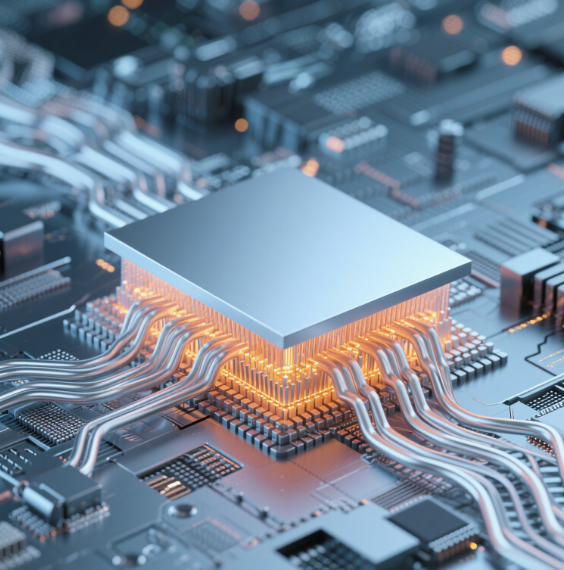
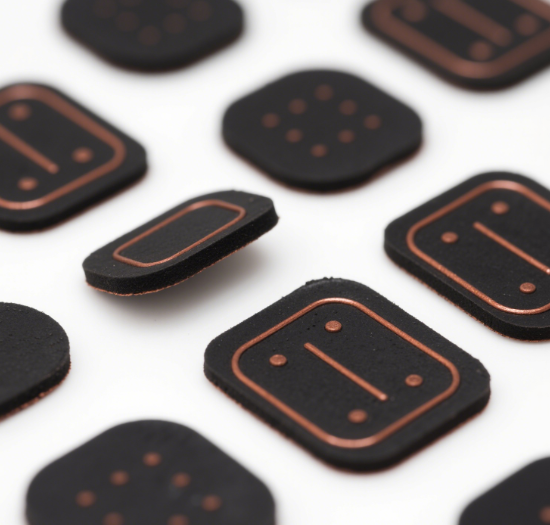
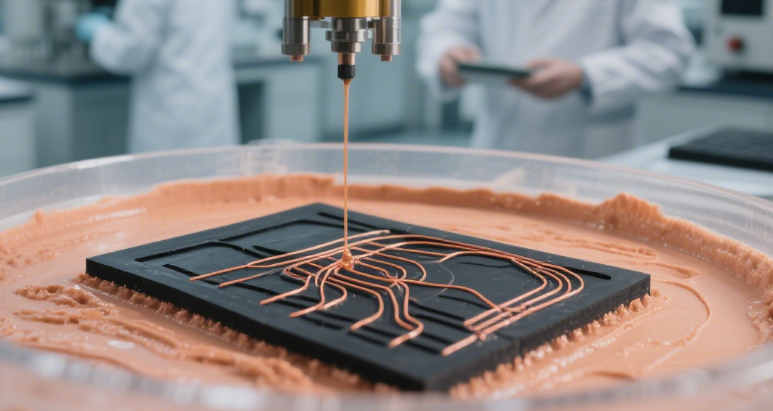
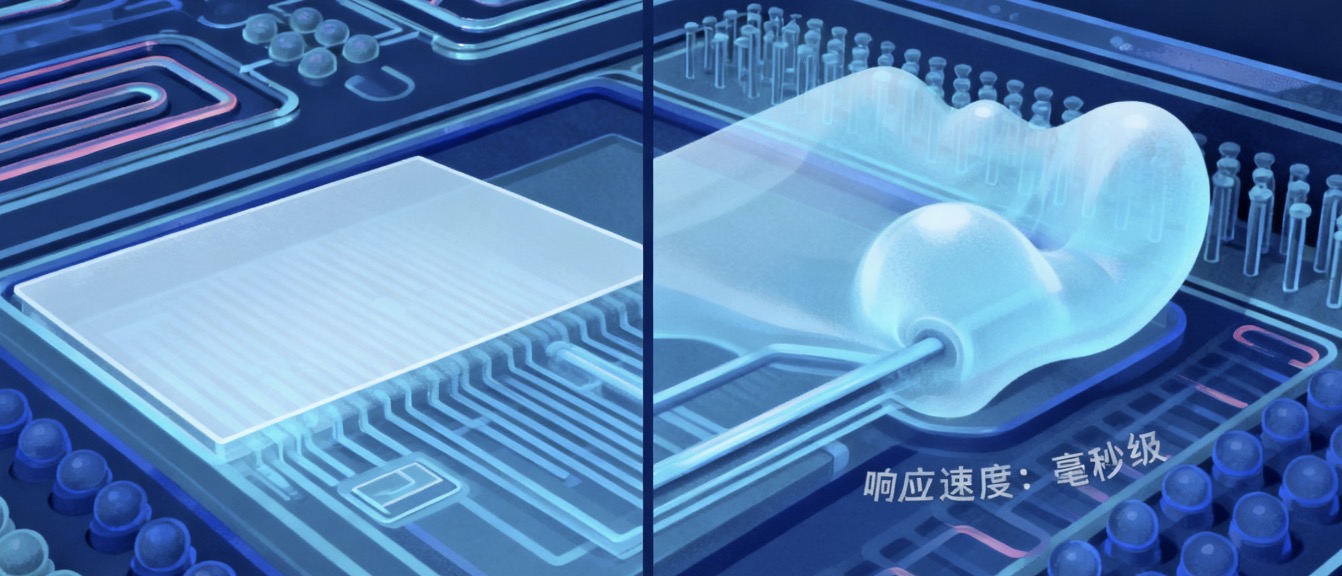
Integrated sensing technology: Pressure, temperature and humidity sensors are directly embedded in the substrate, offering a spatial resolution of 0.1 mm and a response time under 1 ms. Liquid metal / carbon nanotube circuits are embedded in TPU and silicone, eliminating the need for additional sensing layers.
Multimodal perception: Simultaneously detects pressure (0.02 Pa–1 MPa), temperature (±0.1°C), humidity and surface texture, approaching the sensory capabilities of human skin.
Active response functions: Integrated color-changing, electrothermal and vibration modules enable emotional expression, temperature regulation and tactile feedback.
IV. Process & Cost: Mass Producibility & Green Manufacturing
Large-area low-cost processing: Lithography is replaced by compression molding, solution casting and 3D printing. The processing scale expands from centimeter to meter level, cutting costs by over 50%. Wanhua and BASF have launched mass-production-grade TPU/silicone composite materials.
Eco-friendliness and sustainability: The proportion of bio-based and degradable materials continues to rise, alongside solvent-free production processes and recycled material reuse. 2030 targets: over 50% bio-based material ratio and above 90% degradability.
V. Trend Outlook (2025–2030)
- Performance: Ultra-high flexibility (>500% elongation), high-efficiency self-healing (>95% healing efficiency), ultra-thin thickness (<20 μm) and extreme durability (>500,000 service cycles).
- Materials: Si-TPV and bio-based TPU will become mainstream; hydrogels will achieve breakthroughs in medical and high-end bionic fields; silicone-based materials will focus on refined facial bionics.
- Functions: Integration of substrate, sensing and actuation; combined multimodal perception and active response, evolving toward “skin-like bionic organs”.
- Applications: Wide penetration in humanoid robots (facial & hand components), industrial collaborative robots, medical rehabilitation equipment and companion robots.
VI. Core Challenges
- Performance balancing: Trade-offs between bionic soft touch and mechanical strength, high sensitivity and operational stability, as well as ultra-thin design and processing feasibility.
- Environmental stability: Water retention for hydrogels, aging resistance for silicone materials, and yellowing resistance for TPU.
- Cost constraints: High large-scale application costs of high-end materials such as liquid metal and graphene.