











Unveiling the Mysteries of Transparent Conductive Films
2025/12/26
0
In today’s era of rapid technological advancement, electronic devices have become an indispensable part of our daily lives. From smartphones and tablets to liquid crystal displays (LCDs) and solar cells, all these devices rely on a crucial material — transparent conductive films. But what exactly are transparent conductive films?

Simply put, a transparent conductive film is a thin film material that combines high light transmittance with excellent electrical conductivity. It acts like an invisible “bridge”: while ensuring light can pass through freely, it efficiently conducts electric current to enable the normal operation of various electronic devices. This unique combination of properties makes transparent conductive films play an indispensable role in numerous fields.
Just imagine: without transparent conductive films, our smartphone screens might become blurry, and touch operations would turn sluggish; LCDs could fail to display clear and vivid images; solar cells might be unable to effectively convert light energy into electrical energy. It is evident that although transparent conductive films seem inconspicuous, they are pivotal to the development of modern technology.
The Remarkable Properties of Transparent Conductive Films
(1) High Light Transmittance: Delivering Clearer Visual Experience
High light transmittance is one of the key characteristics of transparent conductive films. Transmittance, in simple terms, refers to the proportion of light that passes through the film. High transmittance means more light can penetrate the film, allowing us to enjoy a clearer and brighter visual experience when viewing electronic device screens.
In daily life, the screens of devices such as smartphones and tablets all depend on the high light transmittance of transparent conductive films. If a screen had insufficient transmittance, the images displayed would be blurry and dim, and colors would lose their original vibrancy — a scenario that would significantly degrade user experience. In contrast, the high transmittance of transparent conductive films maximizes the restoration of the screen’s inherent color and brightness, making viewers feel as if they are directly seeing the images behind the screen and delivering an immersive visual experience.
Take smartphone screens as an example: high-quality transparent conductive films can achieve a light transmittance of over 90%, even approaching 95%. This allows users to clearly view content on their phone screens even under direct sunlight, whether browsing the web, watching videos, or playing games, without being disturbed by ambient light.
(2) Excellent Electrical Conductivity: Serving as High-Speed Channels for Current
In addition to high light transmittance, transparent conductive films also possess excellent electrical conductivity. Conductivity refers to a material’s ability to transmit electric current, and for transparent conductive films, this property is critical.
In electronic devices, current needs to be transmitted quickly and stably between components to ensure the devices operate normally. Transparent conductive films act like highways, providing unobstructed channels for current flow. They can rapidly conduct current generated by electronic components to where it is needed, guaranteeing the efficient operation of electronic devices.
In LCDs, transparent conductive films serve as electrodes, transmitting current generated by the driving circuit to the liquid crystal layer. This controls the alignment of liquid crystal molecules, enabling image display. If a conductive film had poor conductivity, current transmission would be hindered, leading to issues such as screen flickering and uneven color. On the contrary, the excellent conductivity of transparent conductive films ensures stable current transmission, allowing screens to display clear and consistent images.
In the field of electronic shielding, excellent electrical conductivity is the key to achieving efficient electromagnetic shielding. When external electromagnetic waves irradiate a transparent conductive film, the film’s good conductivity induces an electric current on its surface. These induced currents generate an electromagnetic field on the film’s surface that is opposite to the external electromagnetic waves, effectively neutralizing the interference from external electromagnetic waves and achieving the purpose of electromagnetic shielding.
(3) Other Properties: Stability and Flexibility
Beyond high light transmittance and excellent conductivity, transparent conductive films also possess other important properties, such as stability and flexibility.
Stability refers to the ability of transparent conductive films to maintain their performance unchanged under different environmental conditions. Whether in high temperature, low temperature, humidity or dry environments, transparent conductive films need to function stably. For example, electronic devices used outdoors — such as solar panels and outdoor displays — require their transparent conductive films to withstand prolonged sun exposure, wind and rain erosion, and drastic temperature changes. If a conductive film had poor stability, its performance might degrade over time, shortening the service life of the device. In contrast, high-quality transparent conductive films exhibit outstanding stability, capable of operating stably for extended periods under various harsh environments and ensuring the reliable operation of equipment.
Flexibility enables transparent conductive films to adapt to different shapes and application scenarios. As technology advances, an increasing number of electronic devices are trending toward flexibility and foldability — such as flexible displays and wearable devices. In these applications, transparent conductive films need to have good flexibility, allowing them to bend and fold without damaging their performance. For instance, in flexible OLED displays, transparent conductive films must be able to bend along with the screen while maintaining excellent conductivity and light transmittance. This flexibility not only expands the application scope of transparent conductive films but also provides more possibilities for the design and innovation of electronic devices.
The Working Principle of Transparent Conductive Films in Electronic Shielding
(1) Basic Principles of Electromagnetic Shielding
Before understanding how transparent conductive films achieve electronic shielding, let us first explore the basic principles of electromagnetic shielding. Electromagnetic shielding, in simple terms, uses a shield to block or attenuate the propagation of electromagnetic waves. This protects electronic devices from interference by external electromagnetic waves, while also preventing electromagnetic waves generated by the devices themselves from leaking and affecting the surrounding environment.
Why do electronic devices need electromagnetic shielding? The reason is that the environment we live in is filled with a wide variety of electromagnetic waves. From signals transmitted by mobile phone base stations to electromagnetic radiation generated by household appliances, these electromagnetic waves can interfere with the normal operation of electronic devices if not shielded. For example, when mobile phone signals interfere with TV signals, snowflakes or stripes may appear on the TV screen; when a computer is affected by electromagnetic interference from a nearby microwave oven, it may crash or lose data.
For some devices with extremely high requirements for electromagnetic environments — such as medical equipment and aerospace devices — electromagnetic shielding is even more crucial. In hospitals, magnetic resonance imaging (MRI) equipment needs to operate in an environment with almost no external electromagnetic interference; otherwise, the accuracy of imaging will be affected, leading to misdiagnosis by doctors. In the aerospace field, if electronic equipment on an aircraft is subject to electromagnetic interference, it may cause the flight control system to malfunction, endangering flight safety.
(2) How Transparent Conductive Films Achieve Electronic Shielding
So, how do transparent conductive films achieve electronic shielding? This is mainly attributed to their excellent electrical conductivity and unique physical structure.
When external electromagnetic waves irradiate a transparent conductive film, the film’s good conductivity induces an electric current on its surface. According to the principle of electromagnetic induction, these induced currents generate an electromagnetic field that is opposite in direction to the external electromagnetic waves. This reverse electromagnetic field acts like a shield, effectively neutralizing the interference from external electromagnetic waves and achieving electromagnetic shielding.
From a microscopic perspective, free electrons in the transparent conductive film move directionally under the influence of external electromagnetic waves, forming induced currents. These free electrons are like well-trained soldiers: upon receiving the “command” from electromagnetic waves, they move quickly to form a solid line of defense, resisting the invasion of external electromagnetic waves.
The physical structure of transparent conductive films also plays an important role in electromagnetic shielding. Their thin film structure can increase the reflection and scattering of electromagnetic waves inside the film, further attenuating the intensity of the electromagnetic waves. When electromagnetic waves enter the conductive film, they are continuously reflected and scattered inside it — much like constantly hitting walls in a maze — and their energy is gradually consumed. As a result, they cannot penetrate the conductive film to interfere with internal equipment.
Application Examples of Transparent Conductive Films in Various Fields
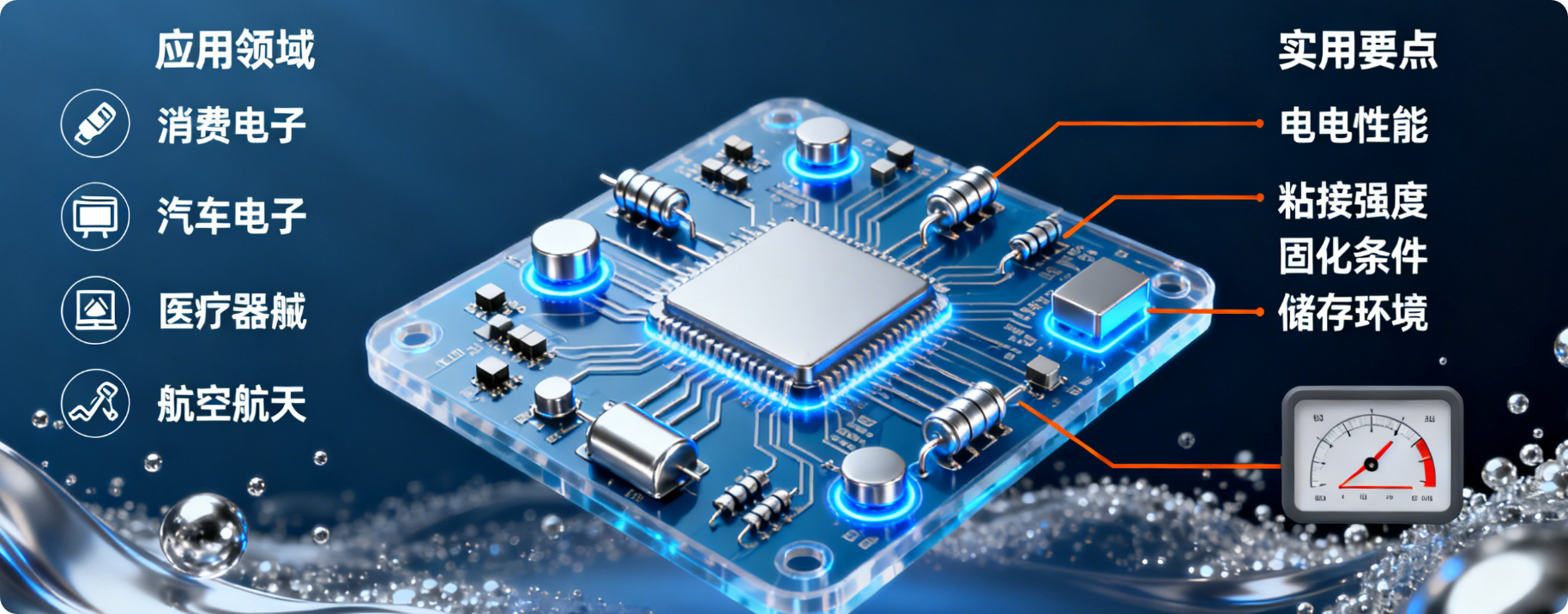
(1) Consumer Electronics: Making Phones and Computers Run More “Smoothly”
In the field of consumer electronics, transparent conductive films are widely used, bringing us a better user experience. Take smartphones as an example: transparent conductive films are a key component of touchscreens. When we touch a smartphone screen with our fingers, the transparent conductive film can detect changes in capacitance and quickly transmit this signal to the phone’s control system, enabling precise touch operations. At the same time, its high light transmittance ensures clear screen display, allowing us to enjoy a clear and smooth visual effect when using our phones.
In computer monitors, transparent conductive films also play an important role. They not only improve the light transmittance of the monitor, making images clearer and more vivid, but also effectively shield external electromagnetic interference, ensuring more stable operation of the computer. Imagine: without the shielding effect of transparent conductive films, when we use a computer, surrounding electromagnetic waves may interfere with the signal transmission of the monitor, leading to problems such as screen flickering and color distortion — issues that would seriously affect our work and entertainment experience. Transparent conductive films act like an invisible “shield”, protecting our computer monitors and allowing us to focus on work and entertainment.
(2) New Energy Vehicles: Ensuring the Stable Operation of Intelligent Driving
With the rapid development of new energy vehicles, the application of transparent conductive films in this field has attracted increasing attention. In new energy vehicles, transparent conductive films are mainly used for electromagnetic shielding and window heating.
For new energy vehicles, electromagnetic shielding is crucial. The electronic systems inside a car are very complex, and various electronic devices generate electromagnetic waves during operation. If these electromagnetic waves are not shielded, they may interfere with each other, affecting the normal operation of the equipment. Transparent conductive films can effectively shield these electromagnetic waves, ensuring the stable operation of the electronic systems inside the car and providing reliable support for intelligent driving.
Window heating is another important application of transparent conductive films in new energy vehicles. In cold weather, car windows are prone to fogging or icing, affecting the driver’s visibility. Transparent conductive films can generate heat through electric current, quickly removing fog and ice from the windows. This allows drivers to maintain clear visibility, improving driving safety.
(3) Other Fields: Wide Applications in Medical, Aerospace, and More
In addition to consumer electronics and new energy vehicles, transparent conductive films are also widely used in fields such as medical treatment and aerospace.
In medical equipment, transparent conductive films are used to manufacture some high-precision instruments, such as magnetic resonance imaging (MRI) equipment. MRI equipment needs to operate in an environment with almost no external electromagnetic interference. The electromagnetic shielding performance of transparent conductive films can effectively block interference from external electromagnetic waves, ensuring the accuracy of imaging and helping doctors diagnose diseases more accurately.
In the aerospace field, transparent conductive films also play an important role. Aircraft are equipped with numerous electronic devices that have extremely high requirements for the electromagnetic environment. Transparent conductive films can be used in aircraft cockpit glass and display screens, achieving both electromagnetic shielding and good light transmittance without affecting the pilot’s line of sight. Meanwhile, in some satellites and spacecraft, transparent conductive films are used to protect electronic equipment from cosmic rays and electromagnetic radiation, ensuring the stable operation of the equipment in the harsh space environment.
Development Prospects and Challenges of Transparent Conductive Films
(1) New Opportunities Brought by Technological Breakthroughs
With the continuous advancement of technology, transparent conductive film technology is also undergoing constant innovation, bringing broad prospects and numerous new opportunities for its future development.
In terms of material research and development, new types of transparent conductive materials are emerging one after another. For example, graphene — a two-dimensional material with excellent electrical, mechanical, and optical properties — is considered a highly promising candidate material for transparent conductive films. It has ultra-high carrier mobility and good flexibility, and theoretically can achieve higher conductivity and light transmittance, while also being applicable to flexible electronic devices. In addition, materials such as carbon nanotubes and silver nanowires have also shown unique advantages in the field of transparent conductive films. Carbon nanotubes have good conductivity and mechanical properties, enabling the preparation of high-performance transparent conductive films; silver nanowires have high conductivity and high light transmittance, and have broad application prospects in flexible displays, touchscreens, and other fields. The emergence of these new materials provides new possibilities for improving the performance and expanding the applications of transparent conductive films.
Improvements in preparation processes will also drive the development of transparent conductive film technology. At present, some advanced preparation processes — such as chemical vapor deposition (CVD), atomic layer deposition (ALD), and magnetron sputtering — can already produce high-quality transparent conductive films. In the future, with further optimization and innovation of preparation processes, it is expected to achieve higher production efficiency, lower costs, and better film uniformity and stability. For example, by improving the CVD process, it is possible to prepare large-area, high-quality graphene transparent conductive films; adopting the ALD process allows precise control of film thickness and composition, producing transparent conductive films with more excellent performance.
With the rapid development of emerging technologies such as 5G, the Internet of Things (IoT), and artificial intelligence (AI), the application prospects of transparent conductive films in these fields are also very broad. In 5G communication, transparent conductive films can be used to manufacture transparent antennas, realizing efficient signal transmission without affecting the appearance and function of the device; in the IoT field, transparent conductive films can be applied to smart sensors, smart glass, and other devices, realizing data collection and transmission, and providing support for the development of the IoT; in the AI field, transparent conductive films can be used to manufacture flexible electronic skin, realizing the perception of physical quantities such as pressure, temperature, and humidity, and providing richer data sources for the development of AI.
(2) Challenges Faced and Solutions
Although transparent conductive films have broad development prospects, they still face some challenges in practical applications, and we need to find effective solutions.
Cost is one of the main challenges faced by transparent conductive films. At present, some high-performance transparent conductive film materials — such as indium tin oxide (ITO) — have high costs due to the scarcity of indium resources, limiting their large-scale application. To solve this problem, on the one hand, it is necessary to increase investment in the research and development of new low-cost materials to find alternatives to ITO, such as the graphene, carbon nanotubes, and silver nanowires mentioned earlier; on the other hand, production efficiency can be improved and production costs reduced by optimizing preparation processes. For example, preparing silver nanowire transparent conductive films using the solution method has the advantages of low cost and simple preparation process compared with traditional vacuum coating processes.
Stability is also an important issue that needs to be addressed for transparent conductive films. In practical applications, transparent conductive films may be affected by environmental factors such as high temperature, high humidity, and light irradiation, leading to performance degradation. To improve the stability of transparent conductive films, we can start from two aspects: material selection and structural design. In terms of materials, choose materials with good stability, or modify existing materials to improve their oxidation resistance and corrosion resistance; in terms of structural design, adopt a multi-layer composite structure, adding a protective layer or hardening layer on the surface of the conductive layer to prevent the external environment from affecting the conductive layer. For example, coating a layer of silicon dioxide (SiO₂) protective layer on the surface of silver nanowire transparent conductive films can effectively improve their oxidation resistance and stability.
Large-area preparation and uniformity control are also technical challenges faced by transparent conductive films. At present, although some preparation processes can produce high-quality transparent conductive films, there are still shortcomings in large-area preparation and uniformity control. To solve this problem, it is necessary to further improve preparation equipment and processes, and develop technologies suitable for large-area preparation. For example, adopting the roll-to-roll (R2R) process can realize the continuous production of transparent conductive films, improving production efficiency and film uniformity; at the same time, using advanced monitoring technology to conduct real-time monitoring of the preparation process and adjust process parameters in a timely manner can ensure the quality and uniformity of the film.
As a key material, transparent conductive films play an important role in fields such as electronic shielding. With the continuous advancement of technology, transparent conductive films will usher in broader development prospects, but at the same time, we need to work together to overcome the challenges faced and promote their better development, making greater contributions to technological progress and social development.
Summary and Outlook
As a key material in the field of modern technology, transparent conductive films play a pivotal role in electronic shielding and numerous other fields by virtue of their unique properties such as high light transmittance and excellent electrical conductivity. From consumer electronics to new energy vehicles, from medical equipment to aerospace, transparent conductive films can be seen everywhere, providing strong support for technological progress and product innovation in these fields.
With the vigorous development of emerging technologies such as 5G, IoT, and AI, transparent conductive films are ushering in unprecedented development opportunities. The continuous emergence of new materials and the continuous improvement of preparation processes will further enhance the performance of transparent conductive films and expand their application fields. We have reason to believe that in the future, transparent conductive films will make breakthroughs in more fields, bringing more convenience and surprises to our lives. Let us jointly look forward to transparent conductive films shining more brightly on the path of technological innovation!
Dongguan Yusheng Technology specializes in the R&D and production of transparent conductive films. Customers are welcome to contact us!