











Exclusive Characteristics of the Marine Environment: Why Ordinary Waterproof Adhesives Fall Short
2025/12/22
0
Marine waterproof sealants (also known as marine sealants) must withstand extreme conditions such as long-term saltwater immersion, tidal pressure, UV exposure, and biofouling. Their core performance differs fundamentally from that of ordinary waterproof adhesives (see the table below):
| Performance Dimension | Ordinary Transparent Waterproof Adhesive | Marine Waterproof Sealant | Core Technical Support |
|---|---|---|---|
| Salt Resistance | Moderate (only resistant to occasional freshwater scouring) | Excellent (no corrosion after 2,000-hour salt spray test) | Contains ion-blocking fillers to prevent chloride ion penetration |
| Water Exposure Strength | For accidental contact or positive-side waterproofing | Sustained immersion (no water migration under 5bar pressure) | Hydrophobic chain ends and nano-modified polymers form a dense waterproof film |
| Elasticity and Deformation Resistance | Low (only adapts to slight substrate deformation) | High (elongation rate > 400%, resistant to hull bending) | Elastomer framework + plasticizer formulation |
| Substrate Compatibility | Limited (building materials such as ceramic tiles and stone) | Versatile (metal, FRP, PVC, wood) | Contains adhesion promoters for primer-free bonding |
| Weather Resistance | Average (aging within 3–5 years) | Excellent (no chalking after 5-year simulated marine exposure) | Composite of UV stabilizers and weather-resistant polymers |
II. Core Application Scenarios: Full-Dimensional Protection from Vessels to Marine Engineering
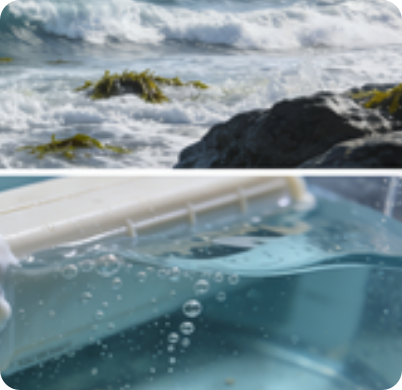
waterpoof
1. Vessel Manufacturing and Maintenance (Suitable for Above and Below the Waterline)
- Hull Structure Sealing: For deck-hull joints, keel bonding, and cabin bulkhead splicing, polyurethane (PU) sealants are preferred, as they can withstand vibration and structural expansion/contraction.
- Turbine and Accessory Sealing: For hull-penetrating pipelines, propeller shaft sleeves, and porthole frames, polysulfide sealants are adopted for their dual resistance to fuel oil and underwater sealing performance.
- Emergency Underwater Repair: Underwater-curing sealants allow direct crack repair at depths up to 10 meters, forming a watertight layer with surface drying in 1–2 hours.
2. Marine Renewable Energy Facilities
- Offshore Wind Power Foundations: For steel pipe pile-concrete cap joints and cable penetration holes, silane-modified polymer (SMP) sealants are used, which offer salt spray resistance and low VOC content to meet environmental standards.
- Tidal Energy Equipment: For blade-hub connections and equipment hatch sealing, products must provide low-temperature flexibility (-30℃, 180° bending without cracking) and resistance to marine biofouling.
3. Ports and Marine Structures
- Wharf Steel Structures: For steel pile butt joints and breakwater concrete cracks, silicone sealants are selected for UV aging resistance and compatibility with anti-corrosion coatings.
- Mariculture Facilities: For cage frame splicing and floating body sealing, food-grade non-toxic sealants are used to avoid contaminating aquaculture water.
4. Military and Special Equipment
- Submarines and Amphibious Equipment: For hatch sealing and observation window bonding, sealants must pass IMO fire resistance tests (Class A fire rating) and hydrostatic pressure tests (≥10bar).
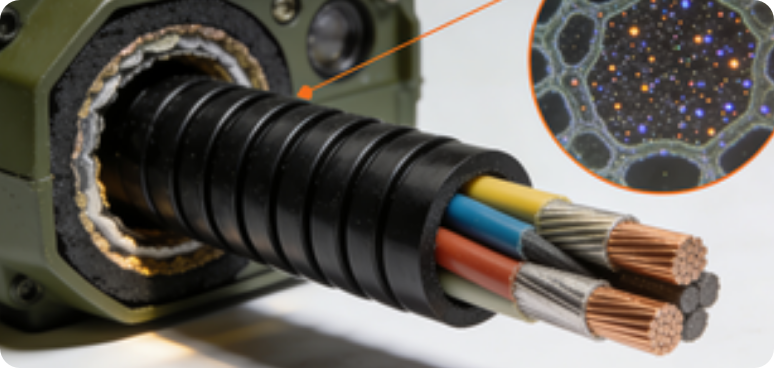
- Marine Detection Equipment: For underwater sensor housings and cable connectors, perfluoroelastomer-based sealants are applied for their strong corrosion resistance and adaptability to deep-sea high-pressure environments.
III. Core Guidelines for Selection and Construction
1. Three Key Factors for Precise Selection
- Select by Medium: Polysulfide types for fuel oil contact; SMP types for freshwater areas; polyurethane types for deep-sea high-pressure conditions.
- Select by Construction Conditions: Moisture-curing types for wet surface application; fast-curing types (e.g., 3M™ 5200 Fast Cure, fully cured in 48 hours) for emergency repairs.
- Select by Environmental Requirements: Compliance with REACH regulations for the EU market; adherence to MARPOL Annex VI VOC limits for marine applications.
2. Key Construction Technical Points
- Substrate Preparation: Sand metal surfaces to remove oxide layers; wipe fiberglass surfaces with acetone to remove wax; apply special primers on wet surfaces to enhance adhesion.
- Sealant Application: Use pneumatic caulking guns for uniform application. For joints wider than 5mm, insert foam backer rods to prevent incomplete curing caused by excessively thick sealant layers.
- Curing and Maintenance: After construction below the waterline, allow 72 hours of curing before immersion. When ambient temperature is below 5℃, heat the area to accelerate curing (temperature should not exceed 60℃).
3. Quality Inspection and Maintenance
- Factory Inspection: Provide ASTM B117 salt spray test reports (≥2,000 hours) and ISO 4892 UV aging test reports.
- Regular Maintenance: Conduct inspections every 6 months. If chalking or peeling occurs, remove old sealant and reapply to prevent substrate corrosion caused by chloride ion penetration.
IV. Common Misconceptions and Solutions
- Misconception 1: Replacing marine sealants with architectural silicone sealants → Consequence: Cracking and water seepage within 3 months → Solution: Replace with marine-grade silicone sealants containing anti-salt additives.
- Misconception 2: Skipping substrate preparation for underwater construction → Consequence: Insufficient adhesion and peeling → Solution: Remove marine organisms with high-pressure water jets and apply underwater primers.
- Misconception 3: Ignoring fire resistance requirements → Consequence: Fire spread from deck sealants → Solution: Select Class A fire-rated sealants that pass IMO FTPC Part 1 tests.