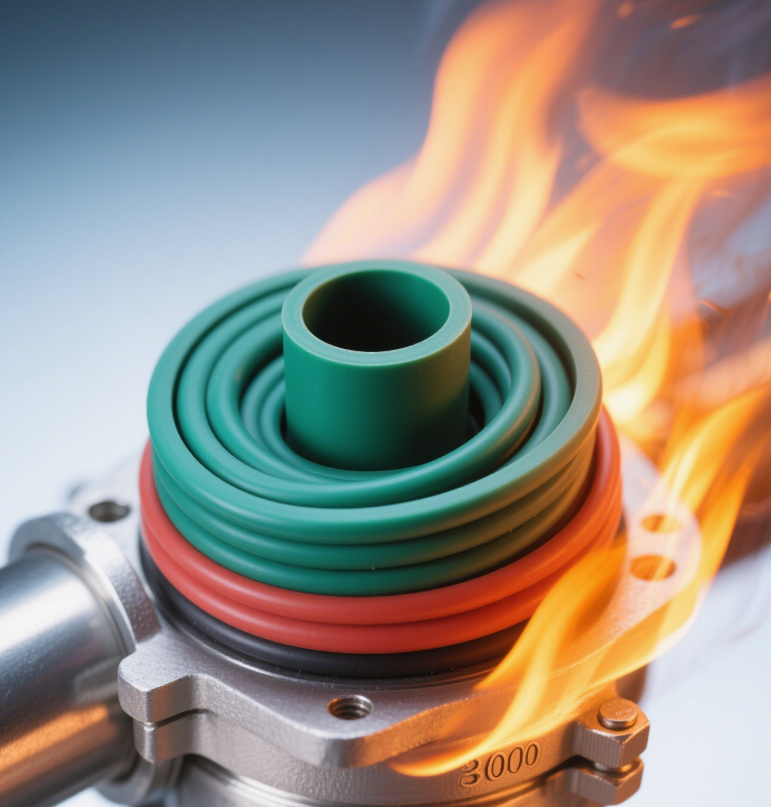












Application and Development of High-Temperature Sealant
2026/01/07
0
I. Core Application Fields and Typical Scenarios
(1) Energy and Power Industry: Sealing Core for Extreme Working Conditions
Thermal Power / Nuclear Power Equipment
As a key sealing material for the butt joints of steam turbine and gas turbine cylinders, it can withstand 900℃ hot steam and 250 bar high pressure (some models can withstand up to 550 bar), ensuring the sealing durability of the unit for more than 10 years. For example, radiation-resistant silicone or epoxy adhesives are required for the flange sealing of nuclear power plant steam pipelines and the bonding of high-temperature components of flue gas turbines.
New Energy Power Generation
The concentrating receivers of solar thermal power plants need to withstand high temperatures above 600℃, and silica gel-based sealants can realize the sealing and heat insulation between heat absorption tubes and brackets; the gearboxes of wind power equipment use oil-resistant and high-temperature adhesives to prevent lubricating oil leakage and adapt to the day-night temperature difference of -60℃ to 200℃.
(2) High-end Manufacturing: Dual Guarantee of Precision and Reliability
Aerospace
The joints of aircraft engine combustion chambers and turbine blades need to use 1280℃ grade high-temperature adhesives (such as water glass-based products) to prevent gas leakage and reduce heat loss; the sealing of propellant pipelines in satellite attitude control systems relies on the high and low temperature cycle resistance of silicone adhesives (-60℃ to 350℃).
Automobile Industry
The interfaces of the exhaust systems of traditional fuel vehicles are sealed with 350℃ grade silicone adhesives, while the battery packs of new energy vehicles use flame-retardant high-temperature adhesives to achieve insulation between battery cells and sealing of heat dissipation channels —— data from a leading automobile enterprise shows that the consumption of high-temperature adhesives per vehicle is 40% higher than that of fuel vehicles.
Electronic and Electrical
The vacuum chamber sealing of semiconductor wafer processing equipment needs to withstand high temperatures above 400℃ without volatiles, and polyimide-based sealants are mostly used; the power modules of 5G base stations use thermally conductive high-temperature adhesives, which take into account both sealing and heat dissipation efficiency.
(3) Basic Industry and Special Scenarios
Metallurgy and Chemical Industry
1730℃ grade high-temperature resistant mortars are used for filling the gaps in blast furnace linings and ingot molds in steel plants, and fluororubber-based products are selected for the flange sealing of acid-resistant tanks and reaction kettles to resist the corrosion of strong acids and alkalis.
Shipbuilding and Ocean Engineering
Models such as Permabond MH196 are used for the flange sealing of ship heat exchangers, which can withstand 200℃ high temperature and seawater erosion, reducing the maintenance frequency by 50% compared with traditional gaskets; the steam pipelines of offshore platforms use HX5838 mortar to achieve anti-corrosion sealing for more than 30 years.
Construction and Civil Use
1280℃ grade sealants are used to repair cracks in civil high-temperature facilities such as fireplaces and chimneys, and sealants with unlimited plasticity are used for the joints of high-temperature air ducts in industrial plants to adapt to the thermal expansion and contraction deformation of pipelines.
II. Application Driving Factors and Market Characteristics
Performance Adaptability
Products in different temperature ranges have clear division of labor: 350℃ grade silicone adhesives dominate the automotive and electronic fields; 1280℃ grade inorganic adhesives focus on metallurgy and fireplace scenarios; 1730℃ grade special adhesives serve cutting-edge fields such as aerospace.
Technology Upgrade Direction
Environmental protection (low VOC) and functional compounding have become trends —— for example, Hangxing HX5838 mortar has achieved the triple characteristics of “no volatilization + self-healing + 30-year service life”, and its export to European and American markets accounts for 70% of the share of similar products.
Regional Demand Differences
The Asia-Pacific region accounts for 41.84% of the global market share (2024). The Yangtze River Delta and Pearl River Delta in China have become the core consumption areas due to the clusters of electronic and automobile industries; the European and American markets focus on the research and development of high-end special adhesives for aerospace.
III. Future Growth Potential Fields
New Energy Energy Storage
The sealing of electrolyte storage tanks of vanadium flow batteries needs to withstand 80℃ high temperature and strong oxidizability, which gives birth to the demand for new fluorocarbon-based sealants.
Hydrogen Energy Equipment
The sealing of bipolar plates of fuel cell stacks needs to withstand 85℃ high temperature and hydrogen permeation, and modified silicone rubber products have been applied in batches.