











Zero-Refractive-Index Materials: Characteristic Analysis and Application Exploration
2025/12/04
0
In the fields of optics and electromagnetism, the refractive index of a material is a core parameter describing its interaction with electromagnetic waves. The refractive index of traditional materials is mostly positive, and some artificial metamaterials can achieve negative refractive index. As a special artificially designed material, Zero-Refractive-Index Materials (ZRIMs) rely on the unique property that both permittivity (ε) and permeability (μ) approach zero simultaneously. They exhibit physical characteristics that subvert traditional optical laws, bringing revolutionary breakthroughs to fields such as communications, energy, and sensing.
I. Core Characteristics of Zero-Refractive-Index Materials
The characteristics of ZRIMs stem from their special electromagnetic parameters, which break the propagation laws of electromagnetic waves in conventional media and present the following four key features:
1. Electromagnetic Wave Phase Freezing: A “Time-Static” Propagation State
In conventional materials, the phase of electromagnetic waves changes with propagation distance (i.e., phase accumulation). In ZRIMs, since the refractive index n = √(με) approaches zero, the wave vector (k) of electromagnetic waves also approaches zero. This causes the phase of electromagnetic waves to remain unchanged when propagating inside the material, as if entering a “time-stagnant” state—regardless of the propagation distance, the wavefront always maintains the same phase. This property allows ZRIMs to be used in constructing “phase-difference-free” signal transmission channels, avoiding phase distortion.
2. Wavefront Control: From “Directional Propagation” to “Omnidirectional Radiation”
The ability of ZRIMs to control electromagnetic wavefronts far exceeds that of traditional materials:
- When electromagnetic waves enter ZRIMs from a conventional medium, according to the law of refraction (n₁sinθ₁ = n₂sinθ₂), since n₂ → 0, the refraction angle θ₂ approaches 0°, meaning electromagnetic waves propagate along the normal direction of the material surface to achieve “directional collimation”.
- Conversely, if electromagnetic waves are excited inside ZRIMs, the wavefront radiates to the external space in the form of “spherical waves”, and the radiation direction is not limited by the material shape, enabling omnidirectional uniform radiation. This property provides new ideas for antenna design.
3. Energy Concentration and Enhancement: An “Electromagnetic Funnel” Breaking the Diffraction Limit
The permittivity and permeability of ZRIMs approach zero, leading to their internal electromagnetic energy density being significantly higher than that of the external environment, forming an “energy focusing” effect. Even if the wavelength of incident electromagnetic waves is much larger than the material size, ZRIMs can concentrate energy in a tiny area, breaking the “diffraction limit” of traditional optics. For example, making ZRIMs into nanoscale “lenses” enables ultra-high-resolution imaging of single quantum dots, with a resolution 1–2 orders of magnitude higher than that of traditional optical lenses.
4. Impedance Matching: Reducing Reflection Loss of Electromagnetic Waves
Electromagnetic waves generate reflection at the interface of two different media due to impedance mismatch. However, the characteristic impedance (Z = √(μ/ε)) of ZRIMs can be flexibly designed by adjusting permittivity and permeability—it can match not only air (Z ≈ 377Ω) but also the impedance of materials such as metals and semiconductors. This property makes ZRIMs ideal “transition layer” materials:
- Adding a ZRIM layer at the interface between an antenna and air can reduce electromagnetic wave reflection loss from 30%–50% to less than 5%.
- Coating the surface of solar cells with ZRIMs can reduce light reflection and improve light absorption efficiency.
II. Typical Application Scenarios of Zero-Refractive-Index Materials
With the above characteristics, ZRIMs have demonstrated practical value in multiple fields, and some technologies have entered the laboratory verification or small-scale commercialization stage:
1. Communications Field: High-Gain, Miniaturized Antennas
Traditional communication antennas (such as base station antennas and satellite antennas) often require large sizes (usually 1–2 times the wavelength) to achieve high gain, but ZRIMs can break this limitation. Using their “omnidirectional radiation” and “energy focusing” properties, the antenna size can be reduced to 1/10 or even 1/100 of the wavelength (e.g., millimeter-wave antennas reduced from centimeter-scale to millimeter-scale) while maintaining high gain (3–5dB gain improvement). Currently, companies such as Huawei and ZTE have tested ZRIM antennas in 5G millimeter-wave base stations, which are expected to reduce the base station volume by 40% and deployment costs by 25%.
2. Energy Field: Efficient Solar Energy Collection and Wireless Energy Transfer
In solar energy utilization, the “anti-reflection” and “energy concentration” properties of ZRIMs can significantly improve the efficiency of solar cells:
- For crystalline silicon cells coated with a ZRIM layer, the light absorption efficiency increases from 75% to over 92%, and the conversion efficiency increases by 2–3 percentage points.
- In addition, ZRIMs can be used for “wireless energy transfer”—by adjusting their electromagnetic parameters, a directional “energy transmission channel” can be constructed. In medical implant devices (such as pacemakers), efficient energy transfer from outside to inside the body can be achieved without wires, with a transmission efficiency of over 85%, far exceeding that of traditional electromagnetic induction-based energy transfer (about 50% efficiency).
3. Sensing and Imaging Field: Ultra-High-Resolution Detection
The ability of ZRIMs to break the diffraction limit gives them unique advantages in the fields of sensing and imaging. For example:
- In biosensing, “ultra-sensitive sensors” based on ZRIMs can detect the binding events of single biomolecules (such as viruses and antibodies), with a detection limit 1–2 orders of magnitude lower than that of traditional surface plasmon resonance (SPR) sensors.
- In medical imaging, ZRIM “lenses” can directly image the internal structure of cells (such as mitochondria and endoplasmic reticulum) without relying on fluorescent labeling, providing a new tool for early cancer diagnosis.
4. Quantum Technology Field: Quantum State Control and Quantum Communication
In the quantum field, ZRIMs can be used for the stable transmission of quantum states: due to their “phase freezing” property, the phase of quantum bits (such as photon quantum states) does not change due to external interference (such as temperature fluctuations and electromagnetic noise) when transmitted in ZRIMs, and the transmission fidelity is increased to over 99.9%, far higher than that of traditional optical fibers (about 95% fidelity). Currently, the Quantum Information Laboratory of the Chinese Academy of Sciences has built a quantum communication test link using ZRIMs, realizing high-fidelity quantum key distribution within a range of 10 kilometers.
III. Challenges and Future Development Directions
Although ZRIMs show great potential, their large-scale application still faces three major challenges:
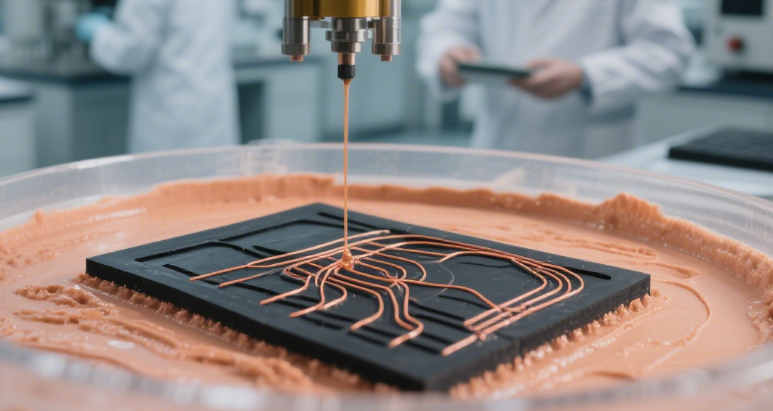
- Difficult material preparation: Currently, most ZRIMs are based on artificial metamaterials (such as metal-dielectric periodic structures), and their preparation process relies on precision micro-nano processing technologies (such as electron beam lithography), resulting in high costs and difficulty in mass production.
- Narrow operating bandwidth: Most ZRIMs only have zero-refractive-index characteristics at specific frequencies (such as microwave and millimeter-wave), making it difficult to meet the demand for wide frequency bands.
- Loss issues: The ohmic loss of metal structures causes attenuation of electromagnetic waves inside the material, affecting performance.
In the future, the development of ZRIMs will focus on three directions:
- Developing all-dielectric ZRIMs (such as those based on photonic crystals and dielectric metasurfaces) to replace metal structures and reduce losses.
- Realizing wide-band zero-refractive-index characteristics (covering visible light to microwave) through AI-assisted design.
- Combining 3D printing technology to reduce preparation costs and promote their popularization in fields such as consumer electronics (e.g., mobile phone antennas) and medical care (e.g., minimally invasive imaging).