











Comprehensive Analysis of Transparent Potting Waterproof Adhesive: From Properties to Applications
2025/12/02
0
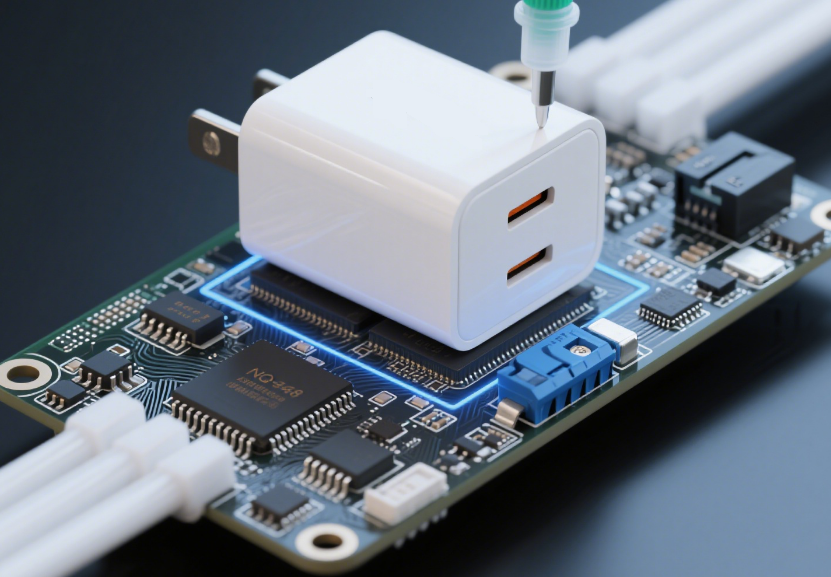
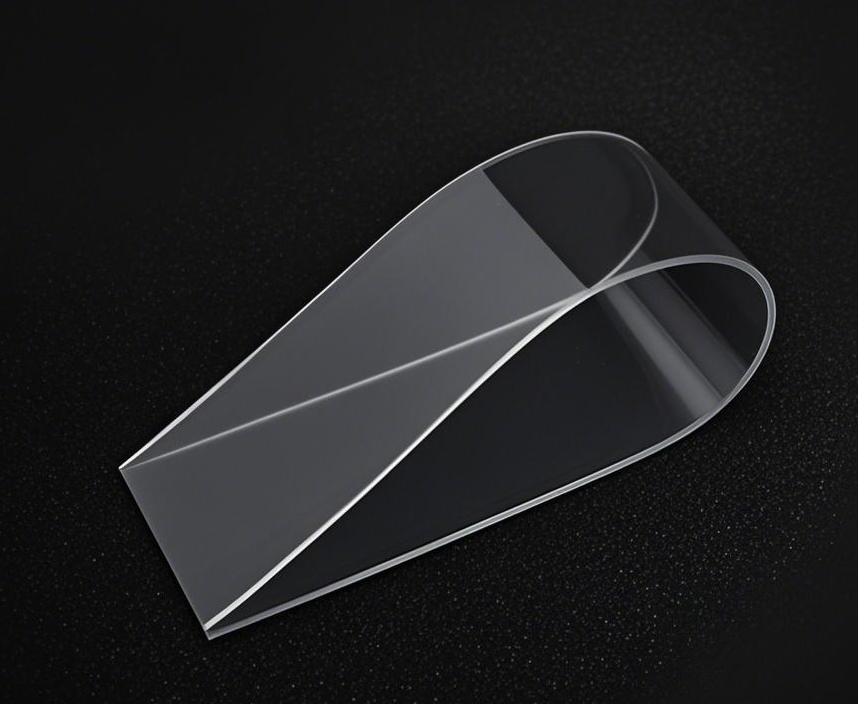
Transparent potting waterproof adhesive is a functional adhesive with high transparency and strong waterproof performance. It is mainly used for the packaging and protection of electronic components, circuit boards, sensors and other products. By filling and curing, it forms a sealed transparent protective layer, which isolates internal components from external erosion such as moisture, dust and chemicals. At the same time, it does not affect the visual observation of internal structures and signal transmission. Its characteristics of both protection and light transmission make it a key auxiliary material in multiple industrial fields.

Comprehensive Analysis of Transparent Potting Waterproof Adhesive: From Properties to Applications
I. Core Properties: Why Choose Transparent Potting Waterproof Adhesive?
The core value of transparent potting waterproof adhesive stems from its multi-dimensional performance advantages, which can be specifically summarized into the following five points:
Dual Protection: Waterproof + Sealing
The adhesive layer formed after curing has extremely low water absorption rate (usually ≤ 0.1%) and can withstand IP67/IP68 level waterproof tests. It can provide long-term protection for internal components in humid, underwater (short-term), rainy and other environments. At the same time, it fits closely to the surface of the substrate, preventing the infiltration of impurities such as dust, oil stains and salt spray, and avoiding problems such as circuit short circuits and metal corrosion.
High Light Transmittance: Visualization and Signal Compatibility
The light transmittance generally reaches more than 90% (close to that of glass). After curing, there is no yellowing or fogging, so the working status of internal components (such as the brightness of LED lamp beads and the color of indicator lights) can be clearly observed. Moreover, it has no shielding effect on infrared, radio frequency and other signals, making it suitable for scenarios that require signal transmission such as sensors and wireless modules.
Excellent Mechanical Properties: Impact Resistance + Aging Resistance
Most products adopt elastic or tough formulas. After curing, the adhesive layer has a certain tensile strength (≥ 5MPa) and elongation at break (≥ 100%), which can buffer the damage to components caused by vibration and impact. At the same time, it has outstanding high and low temperature resistance, and can work stably in the environment of -40℃ ~ 120℃ (some high-temperature resistant models can reach 200℃). It is resistant to ultraviolet rays and ozone aging, and its service life can reach 5-10 years.
Wide Substrate Compatibility
It can be firmly bonded to various substrates such as metals (copper, aluminum, stainless steel), plastics (PC, ABS, PVC), ceramics and glass. No additional priming treatment is required, and the bonding strength is ≥ 1.5MPa, avoiding problems such as delamination and cracking after curing.
Convenient Constructability
Most of them are single-component room-temperature curing or two-component mixed curing types. They have good fluidity (viscosity can be customized, as low as 500mPa·s) and can easily fill complex gaps and small components. The curing speed is controllable (it can be fully cured in 4-24 hours at room temperature, and can be shortened to within 1 hour by heating), which is suitable for mass production and manual operation.
II. Application Scenarios: Which Fields Cannot Do Without It?
Based on its core advantage of “transparent protection”, transparent potting waterproof adhesive has been widely used in electronics, new energy, lighting, sensing and other industries. Typical scenarios include:
Electronic Component Packaging
- Circuit boards (PCB/PCBA): They provide moisture-proof, anti-corrosion and anti-short circuit protection, and are especially suitable for automotive electronics (such as on-board sensors), industrial control boards (such as frequency converter motherboards) and consumer electronics (such as Bluetooth headphone motherboards).
- Connectors/terminals: They fill the gaps of interfaces to prevent poor contact caused by moisture infiltration, and are commonly used in new energy vehicle wire harnesses and underwater equipment connectors.
New Energy Field
- Photovoltaic modules: They package junction boxes and bus bars, resist outdoor rainwater and high-temperature exposure, and improve the service life of modules.
- Lithium batteries: They protect battery tabs and cells, prevent electrolyte leakage and external moisture intrusion, and are suitable for small lithium batteries (such as drone batteries and power bank batteries).
Lighting and Display
- LED lamps: They package LED lamp beads and driving power supplies to ensure that lamps can emit light normally in outdoor (street lamps, garden lamps) or humid environments (bathroom lamps, aquarium lamps) without affecting the light transmittance.
- Transparent displays: They fill the gaps between the screen and the frame, taking into account both waterproof performance and display effect, and are commonly used in outdoor advertising screens and on-board central control screens.
Sensors and Precision Equipment
- Environmental sensors (temperature and humidity sensors, rainfall sensors): They protect sensitive components from the interference of environmental moisture and ensure detection accuracy.
- Medical equipment (such as blood glucose meter probes and small monitors): They package internal circuits to meet the waterproof and antibacterial requirements of medical scenarios.
Other Special Scenarios
- Underwater equipment: Such as the internal potting of waterproof cameras and underwater detectors to realize long-term underwater work.
- Handicrafts and decorations: They provide transparent packaging for badges and specimens, achieving both protection and display effects.
III. Usage Method: How to Construct Correctly to Ensure the Effect?
The construction quality of transparent potting waterproof adhesive directly affects the protection effect. It is necessary to follow the standardized process of “pre-treatment → glue preparation → potting → curing → post-treatment”. The specific steps are as follows:
Substrate Pre-treatment (Key Step)
- Cleaning: Wipe the surface of the substrate to be potted with anhydrous ethanol, isopropanol or special cleaning agent to remove impurities such as oil stains, dust and moisture. Ensure the surface is dry (moisture content ≤ 0.5%) and free of residues.
- Surface treatment (optional): If the substrate is difficult-to-bond plastic such as PP and PE, a special primer can be applied first to improve the bonding strength (this step is not required for ordinary substrates).
Glue Preparation (Required for Two-component Models)
- Pour components A and B into a clean container according to the ratio specified in the product manual (the common ratio is A:B = 10:1 or 5:1, and accurate weighing is required with an error ≤ 1%).
- Stir uniformly with a stirrer (rotating speed 300-500r/min) for 5-10 minutes to ensure uniform mixing and avoid air bubbles. If there are air bubbles, let it stand for 5-10 minutes or perform vacuum defoaming for 1-2 minutes.
- Single-component models do not require glue preparation and can be used directly after opening (note that after opening, they need to be used up within the specified time to avoid moisture absorption and curing).
Potting Operation
- Slowly pour the prepared glue into the product shell or mold to be potted. Control the potting height according to requirements (it is recommended to completely cover the components to be protected and leave a margin of 1-2mm).
- Avoid pouring quickly during the potting process to prevent air bubbles. If air bubbles are found, gently tap the edge of the shell to promote the floating and discharge of air bubbles.
- For complex structures or small gaps, tools such as syringes and droppers can be used to inject the glue accurately to ensure no dead corners are missed.
Curing Process Control
- Room-temperature curing: Place the potted product in a clean, dry and ventilated environment (temperature 20-30℃, humidity ≤ 60%), and wait for complete curing according to the time specified in the manual (avoid touching or vibrating the product during the curing process).
- Heating curing: If it is necessary to shorten the construction period, heating curing can be carried out within the specified temperature range (such as 60-80℃). The specific temperature and time need to refer to the product parameters (avoid over-temperature causing yellowing of the adhesive layer or performance degradation).
Post-treatment (Optional)
- If there is excess adhesive layer on the surface after curing, it can be gently removed with a blade or sandpaper after complete curing.
- For scenarios with high appearance requirements, masking tape can be pasted on the edge of the shell before curing, and torn off after curing to ensure the edge of the adhesive layer is neat.
IV. Purchase Points: How to Select the Right Product for Yourself?
There are many types of transparent potting waterproof adhesives on the market. It is necessary to comprehensively judge from the following 6 dimensions based on actual needs:
Clarify Core Needs: Prioritize Key Performances
- For outdoor/high-temperature environments: Focus on selecting products with good high and low temperature resistance (-40℃ ~ above 150℃) and UV aging resistance (such as those made of silicone or modified epoxy resin materials).
- For scenarios with high light transmittance requirements (such as LED lamps and displays): Select products with light transmittance ≥ 92% and high anti-yellowing grade (such as no obvious yellowing after 1000 hours of UV aging test).
- For rapid production: Select fast-curing types (such as two-component types that are surface-dried in 1 hour and fully cured in 4 hours after mixing).
- For filling small gaps: Select products with low viscosity (≤ 1000mPa·s) and high fluidity.
Pay Attention to Material Types: Great Performance Differences Between Different Materials
At present, the mainstream materials are divided into silicone type, epoxy resin type and polyurethane type. The characteristics of the three are compared as follows:
| Material Type | Advantages | Disadvantages | Application Scenarios |
|---|---|---|---|
| Silicone Type | Optimal high and low temperature resistance (-60℃ ~ 200℃), good elasticity, strong aging resistance, high light transmittance | Relatively low bonding strength, general solvent resistance | Outdoor electronics, high-temperature environments (such as LED street lamps, photovoltaic junction boxes) |
| Epoxy Resin Type | High bonding strength, high hardness, good solvent resistance, low cost | High brittleness (easy to crack at low temperature), general aging resistance | Indoor electronics, scenarios with high structural strength requirements (such as circuit boards, connectors) |
| Polyurethane Type | Good toughness (impact resistance), good low-temperature resistance (-50℃), wide bonding range | Poor high-temperature resistance (≤ 120℃), easy to yellow | Low-temperature environment equipment, scenarios with high toughness requirements (such as small lithium batteries) |
Confirm Technical Parameters: Avoid Failure Caused by “Parameter Mismatch”
Focus on checking the key parameters in the product manual:
- Waterproof grade: It needs to meet the requirements of the actual use scenario (such as at least IP67 for outdoor use and IP68 for underwater use).
- Curing conditions: Confirm whether it matches the production process (such as whether there is heating equipment and whether room-temperature curing meets the construction period).
- Environmental protection requirements: If it is used for consumer electronics and medical equipment, it needs to comply with environmental certifications such as RoHS, REACH and FDA.
Choose Reliable Suppliers: Prioritize Brands and Services
- Select brands with independent R&D capabilities and complete production qualifications (such as domestic Hutian New Materials, foreign Henkel and Dow Corning) to avoid purchasing inferior products (which are prone to yellowing, delamination, incomplete curing and other problems).
- Request suppliers to provide samples and technical support, conduct small-batch tests first (testing bonding strength, waterproof performance and light transmittance), and confirm that they meet the requirements before mass purchase.
V. Precautions: Avoid These “Pitfalls”!
Precautions Before Construction
- For two-component adhesives, they must be prepared in strict accordance with the proportion. Deviation in the proportion will lead to incomplete curing (sticky adhesive layer and reduced performance).
- Single-component adhesives should be used as soon as possible after opening. Unused adhesives should be stored in a sealed manner (to prevent moisture absorption and curing), and it is necessary to check whether there is agglomeration before using them next time.
Precautions During Curing
- Avoid room-temperature curing in high-humidity (≥ 80%) or low-temperature (< 10℃) environments, otherwise the curing time will be prolonged and even incomplete curing will be caused.
- During heating curing, the temperature should be increased gradually (such as from room temperature to 60℃, increasing by 20℃ per hour) to avoid sudden heating causing air bubbles in the adhesive layer or deformation of the substrate.
Precautions for Safety and Storage
- Wear gloves and masks during construction to avoid the adhesive contacting the skin. If it contacts the skin, clean it with water and soap. If it gets into the eyes, rinse immediately with a large amount of water and seek medical attention.
- The product should be stored in a cool and dry place (temperature 5-30℃, humidity ≤ 60%), away from fire sources and children. The storage period is usually 6-12 months (in unopened state).
Precautions for After-sales and Maintenance
- If the adhesive layer cracks or delaminates after potting, check the substrate cleanliness, glue preparation proportion or curing conditions, and re-construct after troubleshooting.
- If the adhesive layer yellows or ages after long-term use, replace the potting adhesive in time to avoid losing the protection effect.
Dongguan Yusheng Technology is a company specializing in the production and R&D of waterproof potting adhesives.