











Tactile Learning Electronic Skin Teaching Aids: Innovative Reform and Application Research in Early Childhood Education
2026/05/06
0
1. Introduction
1.1 Research Background
In modern society, the education industry has always been a core sector of great importance, whose development directly affects individual growth, social progress and national future. In recent years, China’s education sector has achieved remarkable accomplishments. Education accessibility has been greatly improved. By 2023, the retention rate of nine-year compulsory education reached 95.5%, and the gross enrollment rate of higher education stood at 59.6%. More people have gained access to systematic education, laying a solid foundation for personal career development and social advancement. Booming with internet technology, China’s online education market reached 450 billion yuan in 2023 and is expected to maintain a robust growth rate in the next few years. Education has become increasingly diversified, with vocational education, art education, competency-based education and other sectors receiving growing attention and investment. Public educational needs have shifted from mere knowledge imparting to all-round quality cultivation and innovation competency development. Meanwhile, the government has vigorously promoted education equity by increasing investment in rural and underdeveloped areas and implementing targeted education poverty alleviation programs, significantly improving local educational conditions.
Nevertheless, the education industry still faces prominent problems and challenges. The uneven distribution of educational resources remains severe: high-quality resources are highly concentrated in developed cities, while remote and rural areas suffer from shortages. Educational quality varies greatly across regions and schools. Deeply rooted exam-oriented education overemphasizes academic scores and neglects children’s interests and diverse developmental needs. In addition, traditional teaching methods show inherent limitations in stimulating learning motivation and improving efficiency, failing to meet children’s diverse learning demands.
With the rapid advancement of science and technology, the integration of education and technology has become an inevitable trend. Cutting-edge technologies including Virtual Reality (VR), Augmented Reality (AR) and Artificial Intelligence (AI) have been gradually applied in education, creating new opportunities for educational innovation. Against this backdrop, tactile learning electronic skin teaching aids have emerged. Oriented at early childhood education and centered on tactile interaction, they are innovative products of in-depth integration between education and technology. Composed of palm-fitted electronic skin patches and matched picture books or toys, the aids simulate physical textures through vibration and temperature changes when children touch patterns, coupled with real-time voice explanation. This realizes multi-sensory learning integrating tactile, auditory and visual perception, effectively improving children’s memory efficiency, making up for the deficiencies of traditional teaching, and opening up a new path for early childhood education.
1.2 Research Objectives and Methods
This study aims to explore the application potential, practical effects and development prospects of tactile learning electronic skin teaching aids in early childhood education. Specific objectives include: analyzing the technical principles, design features and multi-sensory integration mechanisms of the aids; evaluating their effects on boosting children’s learning interest, memory efficiency and academic performance; discussing practical application challenges and proposing targeted solutions and development suggestions, so as to provide theoretical support and practical guidance for product optimization and large-scale promotion.
Multiple research methods are adopted in this study:
- Literature Research Method: Domestic and international literature on tactile learning, electronic skin technology, early childhood education and multi-sensory learning is systematically reviewed to clarify research status, development trends and frontier progress, consolidate theoretical foundations, and identify research entry points and innovations.
- Case Analysis Method: Schools and educational institutions that have adopted electronic skin teaching aids are selected as research cases. An in-depth analysis is conducted on teaching practices, including application modes, curriculum design and teachers’ and students’ feedback, so as to summarize practical experience and existing problems.
- Comparative Analysis Method: A comparative experiment is carried out between experimental classes using tactile electronic skin aids and control classes adopting traditional teaching. Learning interest, academic performance, memory ability and other indicators are compared to objectively evaluate the product’s impacts on children’s learning.
2. Overview of Tactile Learning Electronic Skin Teaching Aids
2.1 Definition and Working Principles
Tactile learning electronic skin teaching aids are innovative teaching tools that combine advanced electronic skin technology with modern educational concepts. Their core function is to simulate human tactile perception and deliver distinctive learning experiences for children.
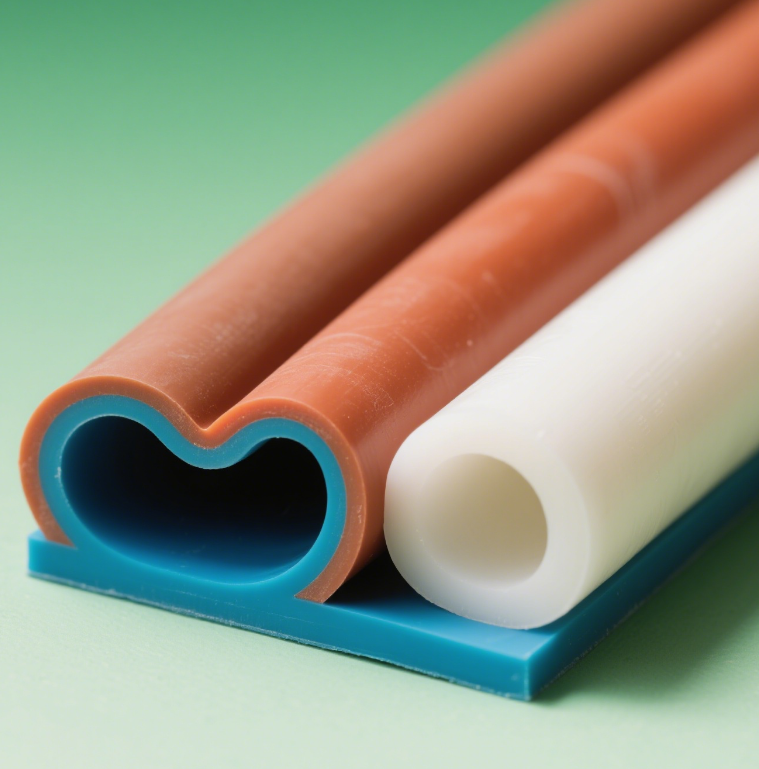
In terms of hardware, the core component is flexible electronic skin patches fitting children’s palms. Made of flexible materials such as Polydimethylsiloxane (PDMS), the patches feature excellent flexibility and fitness, ensuring comfortable wearing and unrestricted hand movement. Embedded with pressure sensors, temperature sensors, vibration sensors and other components equivalent to human tactile receptors, the patches respond to touch behaviors. Pressure sensors detect contact force and convert different pressing intensities into electrical signals; temperature sensors capture temperature differences to simulate real thermal sensations; vibration sensors generate vibrations of varying frequencies and strengths to replicate object textures and properties.
In terms of software systems, electronic skin patches connect with supporting picture books and toys via wireless communication such as Bluetooth. Collected sensory signals are transmitted to paired smart terminals (tablets, intelligent learning machines, etc.). Pre-installed professional software is equipped with a rich database of tactile information covering animals, numbers, daily necessities and other objects. After receiving sensory data, the software matches corresponding tactile features through preset algorithms and outputs control commands to adjust patch vibration, surface temperature and trigger voice narration. For example, when a child touches an “elephant” pattern, the system triggers low-frequency heavy vibrations to simulate the texture of a large body, adjusts the patch to room temperature, and plays audio introducing elephants’ living habits and physical characteristics. This enables children to acquire knowledge through immersive multi-sensory experiences.
2.2 Core Differences and Innovative Advantages
Compared with traditional teaching aids dominated by visual and auditory stimulation such as books, pictures and audios, electronic skin teaching aids take tactile interaction as the core breakthrough. They integrate tactile perception into the learning process, break the limitations of single-sensory teaching, and greatly enhance learning fun. With traditional animal cognition cards, children can only learn through static pictures and texts in a passive and monotonous way. In contrast, when using matched picture books with electronic skin aids, children can directly perceive realistic textures: the sharp thorns of a hedgehog and the soft fur of a rabbit. Immersive tactile experiences make learning active and vivid, effectively stimulating children’s curiosity and exploratory desire.
Its innovations lie in humanized design and multi-sensory learning modes. Ergonomically designed patches are lightweight, wearable and easy for children to operate. Supporting picture books and toys are tailored to children’s cognitive level with bright colors and childlike patterns, and hidden induction areas enable natural interactive triggering. The aids innovatively realize the organic integration of tactile, auditory and visual senses. During learning, children observe vivid patterns visually, perceive simulated textures tactually, and absorb knowledge through voice explanation. The synergy of multiple senses strengthens information comprehension and memory. Relevant studies show that multi-sensory learning can improve children’s memory efficiency by 30%–50%, fully reflecting the innovative value of the product.
3. Functional Characteristics and Technical Implementation
3.1 Hardware Design
3.1.1 Flexible Sensing Materials
The patches adopt PDMS-based flexible sensing materials. With unique physicochemical properties and siloxane molecular structures, PDMS boasts outstanding flexibility with a Young’s modulus of 1–10 MPa. It can be freely bent and stretched to fit the curved surface of children’s palms without hindering daily activities. Meanwhile, PDMS features stable chemical properties and hypoallergenicity, ensuring safety for long-term skin contact.
As an ideal substrate for sensor integration, PDMS supports micro-nano processing technologies such as photolithography and soft etching to fabricate microstructures for embedding various sensitive elements. Micro-groove structures filled with conductive materials such as silver nanowires can produce high-sensitivity pressure sensors that accurately capture subtle touch changes. The material’s transparency also facilitates the integration of optical sensors, reserving space for future functional expansion.
3.1.2 Sensor Array Layout
Sensors are arranged in an array to achieve all-round and high-precision perception. Pressure and temperature sensors are densely distributed on the palm center. Hexagonally arranged pressure sensors with a spacing of 5–8 mm cover major contact areas and distinguish light touch, pressing and sliding actions through signal analysis. Temperature sensors are arranged in a uniform square array at intervals of 7–10 mm to realize real-time temperature simulation, such as a cool sensation when touching an ice pattern.
Finger sensor layout is optimized based on daily operation habits. The density of pressure sensors on the thumb and index fingertip is increased with a spacing of 3–5 mm to accurately identify object shapes and textures. Strain sensors are arranged at finger joints to monitor bending angles and gripping force, capturing movement data for adaptive voice adjustment and personalized learning feedback.
3.2 Software System
3.2.1 Signal Processing and Conversion
Sensory signals captured by electronic skin are converted into electrical signals and transmitted to smart terminals. Original signals are preprocessed through amplification, filtering and other conditioning circuits to eliminate noise and improve accuracy. Weak voltage signals from pressure sensors are amplified to meet the input range of Analog-to-Digital Converters (ADC), while low-pass filters remove high-frequency interference.
Preprocessed data is converted into digital signals and transmitted to microprocessors for intelligent recognition and analysis. By comparing array signal characteristics with database samples, the system accurately identifies touched patterns. After pattern recognition, the microprocessor calls corresponding vibration, temperature and audio data, and outputs control commands to drive vibration motors, temperature control modules and speech synthesis modules, realizing precise conversion from sensory signals to multi-dimensional feedback.
3.2.2 Linkage Mechanism with Supporting Picture Books & Toys
The aids achieve intelligent linkage with matched supplies through built-in chips and Bluetooth Low Energy (BLE) modules such as Nordic nRF52 series, ensuring low power consumption and long battery life. NFC tags or identification QR codes are embedded in picture books and toys. The patch’s built-in reading module quickly captures identification information and transmits data to smart terminals via Bluetooth.
Dedicated terminal applications serve as the core coordination hub, storing massive learning resources including tactile parameters, voice explanations and animations for all patterns. After receiving identification data, the application rapidly matches content and feeds back control commands to the patches. For instance, when touching the number “5”, the system outputs customized vibration, plays pronunciation and mathematical explanations, and displays animations on the terminal screen, constructing an all-round interactive learning ecosystem.
4. Mechanisms for Enhancing Learning Engagement
4.1 Tactile Interaction Stimulates Curiosity
Children are innately curious about the world, and tactile sense, as one of the most fundamental senses, plays a vital role in inspiring exploration. The novel and realistic tactile feedback of electronic skin aids quickly attracts children’s attention. The steady and heavy vibration simulating an elephant and the sharp texture of a hedgehog bring novel sensory experiences, driving children to touch repeatedly and actively explore relevant knowledge. Curiosity-driven thinking enables children to think proactively about biological characteristics and living habits, forming internal motivation for active learning. Relevant research proves that curious children show 40% higher learning initiative and better learning outcomes.
4.2 Multi-Sensory Integration Boosts Participation
Children are prone to distracted attention and prefer intuitive and visualized learning content. The tactile-auditory-visual integrated learning mode perfectly adapts to children’s cognitive characteristics. From the perspective of neuroscience, multi-sensory stimulation activates multiple brain regions simultaneously, forming dense neural connections and improving information processing and memory efficiency. In the learning process, visual enjoyment from colorful patterns, immersive tactile feedback and vivid audio explanation fully mobilize children’s senses. Learning is transformed from passive knowledge reception into active participation, effectively improving concentration and classroom engagement.
4.3 Gamified Learning Experience
Matched game-based toys integrate education with entertainment to achieve the goal of edutainment. The themed game Adventure in Animal Paradise sets interactive tasks such as guiding small animals home through tactile and voice prompts. Number Puzzle Challenge enables children to learn digital sequences and arithmetic operations through puzzle splicing. Knowledge is subtly embedded in game scenarios, making boring foundational learning interesting. Children acquire knowledge and cultivate observation and problem-solving skills in a relaxed gaming atmosphere.
5. Scientific Basis for Improving Memory Efficiency
5.1 Theoretical Foundation of Multi-Sensory Learning
Derived from neuroscience and cognitive psychology, multi-sensory learning theory holds that the simultaneous participation of multiple senses optimizes brain information processing and storage and significantly enhances memory. The human brain’s visual, auditory and tactile processing areas operate collaboratively through complex neural networks. The occipital lobe processes visual pattern information, the temporal lobe analyzes audio content, and the parietal lobe perceives tactile stimulation. The use of electronic skin aids activates all three brain regions at the same time, promoting abundant and three-dimensional information encoding. Multi-sensory stimulation enhances neuronal activity in the hippocampus and improves Long-Term Potentiation (LTP), accelerating the conversion of short-term memory into stable long-term memory.
5.2 Analysis of Practical Application Effects
To scientifically verify the memory-enhancing effects, a controlled experiment was conducted with 60 kindergarten children randomly divided into an experimental group and a control group, with 30 children in each group. The experimental group used tactile electronic skin aids for 8 weeks of standardized teaching, while the control group adopted traditional teaching methods with ordinary picture books and toys. Pre-experiment tests confirmed no significant differences in children’s cognitive level and memory ability between the two groups.
Post-experiment results showed that the average memory test score of the experimental group increased by 18.2 points to 85.6, while the control group’s score only rose by 9.5 points to 72.3. In terms of knowledge mastery accuracy, the experimental group reached 88% for animal knowledge and 86% for digital knowledge, significantly higher than the control group’s 75% and 78%. Statistical analysis indicated significant inter-group differences (p < 0.05). One-month follow-up research also proved that the experimental group had a lower knowledge forgetting rate, verifying the long-term memory consolidation effect of the aids.
6. Case Study on Practical Application
6.1 Application in Kindergarten Teaching
6.1.1 Language Enlightenment Courses
Kindergartens have applied electronic skin aids to language enlightenment teaching. When learning letters such as “A” and words such as “apple”, children perceive simulated writing vibration and realistic object textures, accompanied by standard pronunciation and example sentence explanations. Teaching practice shows that the letter and vocabulary recognition accuracy of the experimental class reached 85%, compared with 68% in traditional classes. Children demonstrated stronger after-class learning initiative and remarkable improvements in oral expression ability.
6.1.2 Scientific Cognition Activities
In natural science courses, the aids help children intuitively understand animals, plants and natural phenomena. Touching a sunflower pattern simulates rough stems and fluffy leaves with audio introduction of growth cycles; touching snow patterns delivers a cool tactile experience with scientific explanation of snow formation. Questionnaire surveys show that 80% of children developed stronger interest in science courses, and their knowledge answering accuracy increased by 20%.
6.2 Application in Family Education
In parent-child family learning scenarios, electronic skin aids optimize interactive education modes. Parents conduct guided learning with digital picture books and tactile feedback, inspiring children’s active thinking and exploration. Long-term user feedback shows that the aids effectively reduce children’s resistance to foundational learning, improve cognitive ability, and enhance parent-child intimacy, becoming an effective auxiliary tool for high-quality family education.
7. Market Prospects and Development Challenges
7.1 Market Potential Analysis
China’s family education expenditure reached 4.5 trillion yuan in 2023, maintaining an annual growth rate of 8%–10%. Parents are willing to invest in high-quality innovative educational products to improve children’s learning efficiency and interest. In the context of in-depth competency-based education reform, kindergartens and primary schools have growing demands for diversified intelligent teaching tools. Meanwhile, national policies such as the Education Informatization 2.0 Action Plan strongly support the integrated development of education and technology, providing favorable policy conditions for product promotion. It is predicted that the market size of tactile learning electronic skin aids will maintain a compound annual growth rate of 30%–40% in the next five years, with broad development prospects.
7.2 Challenges and Countermeasures
- Technical Bottlenecks: Insufficient sensor stability, signal drift and limited battery life restrict user experience. Countermeasures include strengthening industry-university-research cooperation, optimizing sensing materials and circuit energy consumption, and developing flexible wearable batteries and wireless charging technology.
- Cost Constraints: Complex hardware and software systems lead to high production costs and retail prices. Solutions include large-scale mass production to reduce unit costs, optimizing supply chain management, and simplifying structural design under the premise of guaranteed performance.
- Cognitive Barriers: Some educators and parents hold conservative attitudes towards electronic educational products. It is necessary to carry out product demonstrations and professional training for teachers, and conduct popular science publicity to eliminate parental concerns about eye strain and electronic addiction.
8. Conclusion and Prospects
8.1 Research Summary
As a cutting-edge achievement of educational technological integration, tactile learning electronic skin teaching aids possess unique design advantages and extensive application value. The organic combination of flexible electronic skin patches and matched learning resources realizes immersive multi-sensory learning, effectively stimulating children’s learning curiosity, improving classroom participation and consolidating memory. Practical applications in kindergartens and family education verify its positive effects on early childhood enlightenment, providing a new feasible solution for educational innovation.
8.2 Future Development Directions
Technically, future research will focus on high-precision sensing, stable signal operation and long-endurance power supply to optimize tactile simulation effects and product usability. In terms of application expansion, the aids will be promoted to lower primary school grades and adaptive modified for special education groups such as visually and hearing-impaired children to promote education equity. In terms of content construction, in-depth cooperation with educational institutions will be strengthened to enrich curriculum resources, form a standardized teaching system, and drive the sustainable innovative development of early childhood education.