











Research Report on Innovation and Application of E-Skin for Neonatal Health Monitoring
2026/04/30
0
I. Introduction
E-Skin for Neonatal Health Monitoring
1.1 Research Background
Neonatal health is critical to their future growth and development and weighs heavily on every family. According to data from the World Health Organization, approximately 2.5 million newborns worldwide die within the first 28 days of life each year, mostly due to abnormal body temperature, cardiopulmonary dysfunction and other related conditions. Neonates have underdeveloped physical functions, especially in the skin: the stratum corneum is thin, and the connection between the epidermis and dermis is loose, resulting in extremely fragile and sensitive skin with poor resistance to external irritants.
Traditional neonatal health monitoring methods, including mercury thermometers for temperature measurement and stethoscopes for cardiopulmonary examination, are not only inconvenient to operate and incapable of real-time monitoring but also may damage the delicate neonatal skin due to frequent physical contact.
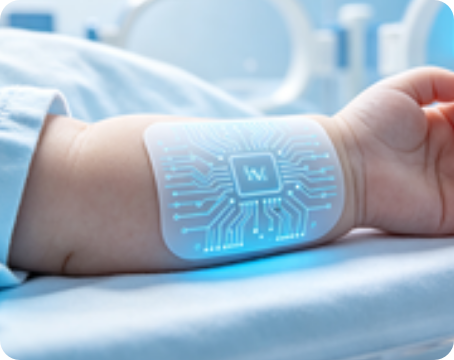
With the rapid advancement of science and technology, electronic skin (e-skin) technology has emerged, bringing new breakthroughs to neonatal health monitoring. As an innovative wearable device, e-skin features flexibility and adhesion similar to human skin, enabling non-invasive, real-time monitoring of human physiological parameters. When applied to neonatal care, e-skin effectively addresses the limitations of traditional monitoring methods. It continuously and accurately tracks vital signs such as body temperature, heart rate, respiratory rate and blood oxygen saturation, providing medical staff and parents with timely and accurate health data. This allows early detection of potential health risks and prompt intervention, greatly upgrading neonatal health protection capabilities and carrying transformative significance for the industry.
1.2 Research Objectives
This report conducts an in-depth analysis of the innovative product—neonatal health monitoring e-skin. It elaborates on the technical specifics, including the properties of ultra-thin and breathable materials (thickness < 0.1 mm) and the working mechanisms of sensors, to clarify how the product achieves precise monitoring of neonatal physiological indicators. Through case studies and simulation tests, the report evaluates practical application performance, covering monitoring accuracy, skin compatibility and timeliness of alarm systems. Additionally, by analyzing market demand, competitive landscape and development trends, it assesses the market potential of neonatal health monitoring e-skin. The findings provide valuable references for enterprises’ market strategies and R&D planning, facilitate the optimized application of e-skin in neonatal care, and drive the high-quality development of the industry.
1.3 Research Methods and Data Sources
This report adopts a multi-method research framework to ensure comprehensive, in-depth and objective analysis. The literature research method is used to collect and sort domestic and international academic papers, patents and industry reports on e-skin technology, neonatal health monitoring and wearable devices, laying a solid theoretical foundation by reviewing technological evolution, current research progress and cutting-edge developments. The case analysis method explores existing e-skin application practices, especially in the medical sector, to summarize strengths, limitations and practical experience for product optimization. Market research, including questionnaires and in-depth interviews, gathers demands, feedback and suggestions from medical workers, new-born parents and medical device distributors to clarify market scale, competition patterns and development trends.
Data sources include authoritative academic databases such as Web of Science and IEEE Xplore; industry reports released by leading market research institutions including iResearch and Gartner; statistical data from medical device industry associations to ensure professionalism and credibility; and field investigations and interviews with enterprises, medical institutions and consumers to reflect real-world application scenarios.
II. Technical Analysis of Neonatal Health Monitoring E-Skin
2.1 Core Technical Principles
2.1.1 Composition and Properties of Ultra-Thin Breathable Materials
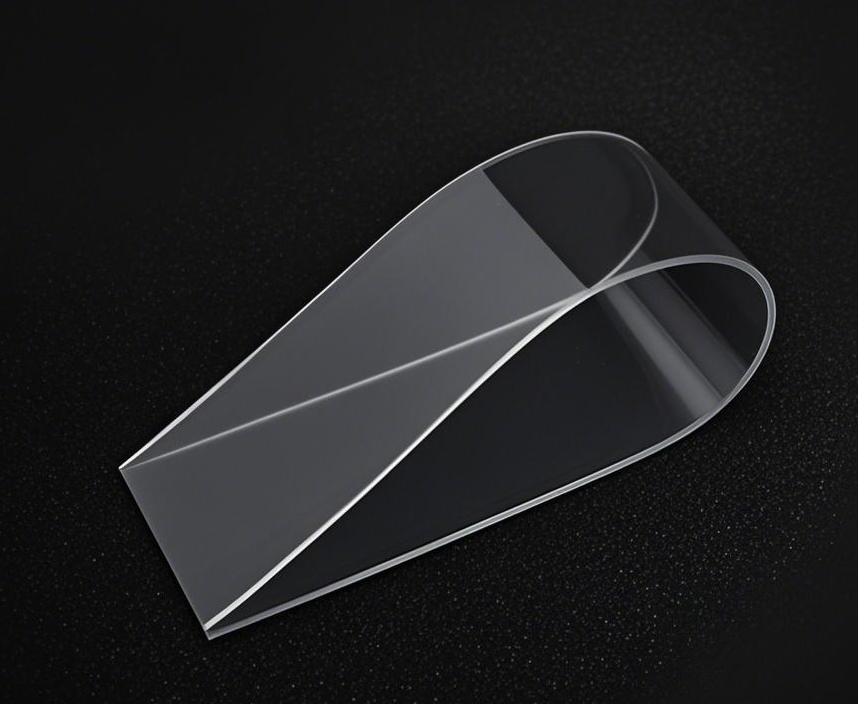
The neonatal health monitoring e-skin is fabricated from composite materials combining thermoplastic polyurethane (TPU) and silk fibroin (SF). TPU is a multifunctional thermoplastic polymer composed of hard and soft segments. Carbamate groups in hard segments form intermolecular hydrogen bonds, endowing the material with high tensile strength, wear resistance and heat resistance; soft segments made of polyether, polyester or mixtures deliver excellent elasticity. With a hardness range of Shore A 65 – 85D, tensile strength of 30 – 60 MPa and elongation at break of 300% – 700%, TPU offers outstanding wear resistance and biocompatibility, reducing skin irritation for neonates. Silk fibroin, extracted from silkworm cocoons, features superior processability, tunable physical properties, excellent biocompatibility and biodegradability.
Adopting specialized manufacturing processes, the thickness of the e-skin is controlled below 0.1 mm. For instance, the nano-network reinforced ultra-thin ion gel film co-developed by Hunan University of Technology and Zhengzhou University reaches merely 12 micrometers. The ultra-thin design delivers exceptional flexibility and skin conformability, adhering closely to the neonatal chest or back with near-zero sensory interference. It possesses an ultra-high water vapor transmission rate of 2464.4 g·m⁻²·day⁻¹, mimicking the respiratory function of human skin. This effectively prevents skin redness and discomfort caused by sweat accumulation and allows the neonatal skin to breathe freely. Moreover, the high stretchability adapts to daily limb movements and physical growth of neonates, maintaining stable performance under moderate stretching to guarantee continuous and accurate monitoring.
2.1.2 Physiological Parameter Monitoring Mechanisms
Integrated with diverse high-sensitivity sensors, the e-skin realizes precise monitoring of multiple vital signs.
- Body Temperature Monitoring: Thermal sensors such as thermistors and thermocouples function based on temperature-dependent changes in material resistance or electric potential. Upon contact with neonatal skin, sensors capture surface temperature variations, convert thermal signals into electrical outputs, and deliver real-time temperature data through accurate signal processing.
- Heart Rate Monitoring: Photoplethysmography (PPG) technology is applied. PPG sensors emit specific-wavelength light onto the skin, which is absorbed, reflected and scattered by tissues. Periodic changes in blood volume and composition caused by heartbeat lead to fluctuating reflected light intensity. Sensors capture these optical variations, convert them into electrical signals, and calculate heart rate via algorithmic analysis.
- Respiratory Rate Monitoring: Strain sensors or capacitive sensors detect subtle thoracic and abdominal deformation during breathing. Respiratory movements cause structural changes in sensors, resulting in variations in resistance or capacitance, which are measured to calculate respiratory frequency.
- Blood Oxygen Saturation Monitoring: Dual-wavelength optical technology utilizes differential light absorption characteristics of oxyhemoglobin and deoxyhemoglobin under red and infrared light. By detecting transmitted or reflected light intensity, complex algorithms calculate arterial blood oxygen saturation.
2.2 Key Technological Innovations
2.2.1 Ultra-Thin and Breathable Design
Traditional neonatal monitoring devices are bulky and incapable of continuous tracking. Most conventional wearable monitors are thick and poorly ventilated, easily causing skin irritation and discomfort after long-term wear. Typical wearable heart rate monitors have a thickness of 1–2 mm, and friction during infant activities frequently triggers redness and allergies.
In contrast, the e-skin, thinner than 0.1 mm, acts as a lightweight secondary skin with minimal restriction on neonatal movement. Its high air permeability accelerates sweat evaporation to keep the skin dry, significantly improving wearing comfort, reducing adverse skin reactions and achieving imperceptible long-term monitoring.
2.2.2 Multi-Parameter Real-Time Monitoring
Commercially available neonatal monitors often only support single-indicator detection, failing to reflect overall health conditions comprehensively. This e-skin synchronously monitors body temperature, heart rate, respiratory rate and blood oxygen saturation. Comprehensive multi-dimensional data analysis enables medical staff and parents to assess neonatal health accurately. For example, fever is usually accompanied by accelerated heart rate, rapid breathing and fluctuating blood oxygen levels. Synchronous monitoring enables early anomaly identification, provides evidence for early diagnosis and treatment, and avoids delayed medical intervention caused by single-parameter limitations.
2.2.3 Intelligent Alarm and Linkage System
When monitoring data exceeds preset normal ranges (such as hyperthermia, arrhythmia and tachypnea), built-in intelligent algorithms trigger immediate judgment. Via Bluetooth and other wireless communication technologies, real-time alarm notifications with specific abnormal indicators and values are pushed to parental mobile APPs, accompanied by sound and vibration reminders for timely awareness.
Furthermore, the e-skin achieves intelligent linkage with crib constant temperature systems. Abnormal temperature data is automatically transmitted to the temperature control device, which adjusts the ambient temperature intelligently to maintain a comfortable and stable environment for neonates, assist physical recovery and reduce health risks induced by inappropriate environmental temperatures.
2.2.4 Washable and Size-Adaptive Design
Constructed with high-stability polymer materials, the e-skin features excellent water resistance and structural stability, maintaining intact performance after repeated washing. Sealed packaging technology protects internal sensors and circuits from water damage, while a streamlined structure prevents dirt residue and facilitates daily cleaning.
To accommodate rapid neonatal growth, the main body adopts stretchable materials combined with adjustable accessories such as hook-and-loop fasteners and elastic bands for flexible size modification. Multiple size specifications are also available to meet the needs of neonates at different growth stages, ensuring stable adhesion and consistent monitoring accuracy throughout infancy.
III. Application Scenarios and Case Analysis
3.1 Application in the Neonatal Intensive Care Unit (NICU)
3.1.1 Practical Application Status
Preterm and critically ill neonates in NICUs require continuous close vital sign monitoring. Traditional wired monitoring equipment, including electrocardiogram monitors and blood oxygen detectors, relies on electrodes and connecting wires that restrict infant movement, complicate nursing operations and increase the risk of skin abrasions, allergies and pressure injuries due to long-term contact with delicate skin.
The neonatal health monitoring e-skin effectively solves these pain points. Medical staff simply attach the ultra-thin e-skin to the infant’s chest or back to initiate all-parameter real-time monitoring. Wireless data transmission synchronizes vital signs to the ward’s central monitoring system, reducing frequent manual measurements, minimizing external interference for neonates and improving overall monitoring efficiency.
3.1.2 Application Effects and Advantages
In NICU settings, the e-skin delivers prominent practical advantages. Its high monitoring accuracy (temperature precision: ±0.1℃) captures subtle physiological fluctuations that are undetectable by traditional thermometers and wired devices, providing reliable data for cardiac and systemic condition evaluation. The wireless and lightweight design simplifies daily nursing procedures such as feeding, diaper changing and bathing, eliminating the risks of wire tangling and detachment and optimizing clinical workflow. By reducing physical restraints, the e-skin enhances neonatal comfort and lowers the incidence of iatrogenic skin injuries.
3.1.3 Case Study
A top-tier tertiary hospital conducted a six-month follow-up assessment on the application of neonatal e-skin in its NICU, covering 50 preterm and sick neonates. A 32-week premature infant suffered limited limb movement and minor skin abrasions due to wire traction under traditional wired monitoring. After switching to e-skin monitoring, medical staff accessed real-time physiological data via mobile terminals and the central monitoring platform. The e-skin promptly alerted to tachycardia, tachypnea and slight hyperthermia, enabling medical staff to identify potential infection, conduct timely blood tests and administer antibiotic treatment. The infant recovered rapidly with effective early intervention. Medical staff confirmed that the e-skin reduced workload, improved monitoring timeliness and accuracy, and delivered significant clinical value.
3.2 Application in Family Daily Care
3.2.1 Household Operation and User Experience
The e-skin is highly user-friendly for household use. Parents can easily apply the device by peeling off the backing film and attaching it flat to the infant’s chest or back, requiring no professional skills. The ultra-thin breathable material ensures comfortable all-day wear without disrupting sleep or daily activities. The supporting mobile APP features a concise interface and visualized data display, enabling parents without medical expertise to easily check real-time vital signs.
User surveys show that parents across different families give positive feedback on the product’s simplicity and comfort. New parents reported that the device requires no complex operation, causes no rejection in infants, and provides real-time health data to relieve parenting anxiety. The product has been widely recognized as an essential auxiliary tool for family neonatal care.
3.2.2 Parenting Support Value
The e-skin enables parents to grasp neonatal health status in real time through continuous vital sign tracking. The intelligent alarm function offers timely reminders for fever, abnormal breathing and other discomforts, allowing families to take prompt measures such as physical cooling and medical visits to prevent condition deterioration. It effectively alleviates parental mental stress caused by blind care and enables scientific, reassuring daily parenting. For example, unnoticeable nocturnal fever can be instantly detected and alerted, avoiding delayed treatment and ensuring timely health management.
3.2.3 Case Study
A young couple used the e-skin for their newborn. One night, the APP triggered an emergency alarm indicating a body temperature of 38.5℃, accompanied by elevated heart rate and respiratory rate. The parents immediately implemented physical cooling and monitored temperature changes in real time via the APP. When fever persisted for half an hour, they promptly sought medical treatment. With reference to the continuous physiological data recorded by the e-skin, doctors quickly confirmed infection-induced fever and arranged targeted treatment. The timely intervention ensured rapid recovery. The couple stated that the e-skin provided critical early warning, greatly enhancing safety in neonatal home care.
IV. Market Analysis and Prospect Outlook
4.1 Market Status and Scale
4.1.1 Global Neonatal Health Monitoring Market Scale
The global neonatal health monitoring market has maintained steady growth in recent years. According to Grand View Research, the market size reached USD [X] billion in 2024 and is projected to achieve a compound annual growth rate (CAGR) of [X]% from 2025 to 2032. Driven by rising global attention to neonatal health, medical technological progress and growing NICU admission demands, the market shows differentiated development across regions. Developed regions with sound healthcare systems maintain high penetration rates of monitoring equipment, while developing countries, supported by economic growth and improved medical infrastructure, present huge growth potential. China, with a large neonatal population, has become a core growth engine for the global market.
4.1.2 Market Share and Position of E-Skin
Currently, e-skin accounts for a relatively small proportion of the neonatal health monitoring market but possesses enormous development potential. Precedence Research data shows that e-skin occupied approximately [X]% of the market in 2024. With continuous technological iteration, the unique strengths of e-skin—non-invasive detection, multi-parameter synchronization and high comfort—have gained increasing market recognition. As manufacturing costs decrease and technology matures, e-skin is expected to become a mainstream product in the neonatal monitoring industry and drive industrial upgrading.
4.2 Competitive Landscape
4.2.1 Analysis of Major Competitors
Globally, enterprises and research institutions have accelerated the R&D of neonatal e-skin. Foreign manufacturers such as Company X (U.S.) adopt advanced nanomaterials and high-sensitivity sensors to lead in technical performance and global market share. Company Y (Japan) focuses on miniaturization and intelligent linkage, realizing in-depth integration with smart terminal devices and occupying a niche market in Asia.
Domestically, Research Institute Z has made breakthroughs in material biocompatibility, effectively reducing skin irritation for sensitive neonatal skin. Emerging domestic technology enterprises leverage flexible innovation mechanisms and precise market insight to iterate product functions and optimize user experience, forming strong competitive momentum.
4.2.2 Competitive Advantages of the Product
Compared with peer products, this neonatal health monitoring e-skin has differentiated strengths: customized ultra-thin (<0.1 mm) breathable materials reduce skin burden for fragile neonates; independent multi-parameter synchronous monitoring technology provides comprehensive health assessment data; integrated intelligent alarm and crib linkage systems realize closed-loop health management; washable design and adjustable sizes enhance practicality and cost performance. These innovations form core competitive barriers in the market.
4.3 Market Prospects and Development Trends
4.3.1 Technological Development Trends
Future e-skin technology will focus on material upgrading, precision improvement and functional diversification. New self-healing, ultra-light and highly biocompatible materials will further optimize comfort and safety. Upgraded sensor and signal processing technologies will enable ultra-high-precision monitoring of subtle physiological changes for early disease screening. Functional integration will be expanded to include blood glucose detection, skin humidity monitoring and controlled drug delivery, building an all-round neonatal health management platform.
4.3.2 Market Demand Forecast
Driven by stable global neonatal birth rates and growing health awareness, market demand for intelligent neonatal monitoring e-skin will continue to rise. Developed regions will sustain high demand for high-end medical monitoring equipment, while developing countries will witness rapid demand release with improved medical consumption concepts. The global market is expected to grow at a CAGR of [X]%, with continuous expansion of market size.
4.3.3 Potential Expansion Fields
Beyond neonatal monitoring, e-skin holds broad application prospects in pediatric rehabilitation and telemedicine. It can track physical indicators during rehabilitation for children with congenital diseases or injuries, supporting personalized treatment adjustment. In remote medical services, wireless data transmission breaks geographical restrictions, enabling remote real-time diagnosis by experts and improving the equitable allocation of high-quality medical resources.
V. Challenges and Countermeasures
5.1 Technical Challenges
5.1.1 Improvement of Sensor Precision and Stability
Despite multi-indicator monitoring capabilities, existing e-skin sensors still have room for optimization in precision and anti-interference. Conventional temperature sensors have an error of ±0.1–0.2℃, and heart rate signals are susceptible to distortion during infant activity, affecting clinical judgment accuracy. Optimization measures include developing high-sensitivity nano-functional materials, upgrading micro-nano processing technology to enhance sensor consistency, and adopting data filtering and noise reduction algorithms to stabilize monitoring data.
5.1.2 Optimization of Long-Term Wearing Comfort
Even with breathable materials, long-term wear may cause mild friction and poor local ventilation, leading to skin redness and allergies. Product optimization directions include developing super-soft skin-friendly composite materials, designing ergonomic structures fitting neonatal body curves, adding stable auxiliary fixing components, and realizing adaptive adjustment of air permeability and adhesion.
5.1.3 Data Security and Privacy Protection
Neonatal health data belongs to sensitive personal information. Wireless data transmission faces risks such as hacker attacks and data tampering, while imperfect storage management may cause information leakage. Solutions include adopting AES and other high-strength encryption algorithms for transmission, establishing hierarchical data access authority and audit mechanisms, implementing multi-backup and off-site storage strategies, and conducting regular security vulnerability detection for data systems.
5.2 Market Challenges
5.2.1 Low Consumer Cognition and Acceptance
Most parents lack understanding of e-skin technology and hold concerns about safety and applicability. Traditional monitoring habits and cost sensitivity also hinder product popularization. Enterprises need to strengthen science popularization through social media, offline lectures and expert endorsement, and provide trial experiences to eliminate user concerns.
5.2.2 Cost Control and Price Competitiveness
High costs of high-precision sensors, special functional materials and sophisticated manufacturing processes result in relatively high product pricing, limiting market penetration in low- and middle-income families. Enterprises can reduce comprehensive costs by optimizing production workflows, bulk raw material procurement, and developing cost-effective alternative materials to enhance market affordability.
5.2.3 Imperfect Industry Standards and Regulations
The e-skin industry lacks unified quality inspection specifications and certification standards, leading to uneven product quality and regulatory ambiguities in market access and supervision. Enterprises should actively participate in the formulation of industry standards, strictly comply with existing medical device regulatory requirements, and strengthen internal quality control to standardize industrial development.
5.3 Countermeasures and Recommendations
5.3.1 R&D Strategy
Increase investment in materials science, sensor technology and signal processing. Promote industry-university-research cooperation between universities, research institutions and enterprises to accelerate the transformation of basic research results into commercial products and sustain technological iteration and upgrading.
5.3.2 Marketing Promotion Strategy
Diversify science popularization via short videos, animations and offline clinical demonstrations. Establish in-depth cooperation with hospitals and maternal and child care institutions to enhance product credibility through clinical verification. Launch preferential policies and comprehensive after-sales services to expand market coverage and user loyalty.
5.3.3 Industrial Cooperation and Policy Support
Improve the upstream and downstream industrial chain collaboration to realize resource sharing and cost synergy. Advocate for government policy support including R&D subsidies, tax incentives and special industrial funds. Strengthen intellectual property protection to encourage technological innovation and create a favorable industrial development environment.
VI. Conclusion and Prospect
6.1 Research Summary
With innovative integrated design, the neonatal health monitoring e-skin delivers prominent comprehensive advantages. Its ultra-thin composite materials ensure outstanding flexibility, air permeability and skin compatibility; multi-sensor collaborative monitoring realizes real-time, accurate capture of core physiological indicators; intelligent alarm and equipment linkage systems upgrade active health management capabilities; humanized designs such as washability and size adaptation meet diversified clinical and household care demands.
In NICU and family scenarios, the e-skin effectively improves monitoring efficiency and accuracy, reduces neonatal skin injury risks, relieves parenting pressure, and provides strong data support for early disease identification and intervention. Although the current market share is limited, driven by technological progress and upgrading health demands, the product possesses irreplaceable market value and broad development potential.
6.2 Future Prospect
In the long run, neonatal health monitoring e-skin will drive the transformative upgrading of neonatal care models, shifting from traditional intermittent sampling to continuous real-time monitoring. Continuous material and technological innovation will further enhance product safety, comfort and functional diversity. With the gradual release of global market demand and standardized industrial development, e-skin will achieve large-scale popularization in both developed and developing regions.
As a cutting-edge intelligent medical device, it will continuously improve neonatal disease prevention and health management levels, safeguard the healthy growth of newborns worldwide, and become a core pillar of high-quality development in the global maternal and child health industry.